

and related: Kiliś, Kostewicz, Pawelski, Sadlakowski, Wyrzykowski...
and related: Kiliś, Kostewicz, Pawelski, Sadlakowski, Wyrzykowski...
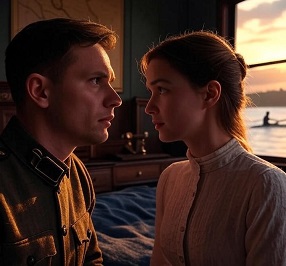 Years came that no one wanted to speak of, as if merely recalling them could summon the ghosts of past pain. These were years of silence so profound they seemed to trap the soul in an abyss of quiet. For Piotr, they meant not just depression but something far more terrifying—a slow slide into a chasm where reason and heart battled for survival. It wasn’t madness, as some whispered, but a despair so acute that the world became alien, unworthy of trust. How could he trust people when betrayal and indifference were their daily bread? How could he believe in a world that so easily stripped away hope? Shattered, Piotr sought solace in the ancient Stoics, in their harsh teachings on self-mastery, but those wisdoms were like ash in his mouth—a fleeting relief before the void returned. Even pantheistic musings, where God, nature, and humanity blended into one, offered no answers. They were merely a fog that blurred the edges of his pain, offering no salvation.
After months, as the darkness receded, Piotr returned to reality—gray, oppressive, filled with a false sense of stability. His job at the Jabłonna Post Office was like a breath that kept him alive but changed nothing. The money he’d saved—a handful of coins, barely enough to survive—became a symbol of his delusions. Each złoty was a stone in the backpack he carried, unsure of his destination. Yet amid that grayness, a thought emerged: escape. It wasn’t about a country or a place—it was about breaking free from the cage, away from stares, gossip, and a world that choked him. Underground activities, nights spent in whispered conversations and risky missions, offered a faint hope that he might find a helping hand abroad. But deep down, he felt it was an illusion—could one truly escape oneself?
A passport to all the world’s countries remained a dream, as unattainable as freedom itself. Letters to the Ministry of Internal Affairs, desperate pleas, even an appeal to Jerzy Urban—all bounced off the wall of bureaucracy. He received a partial document, allowing travel to a dozen or so “socialist” countries, ensnared by the Iron Curtain of the Soviet Union. Albania and Yugoslavia, gateways to the West, were out of reach. Piotr put everything on one card: Yugoslavia. He booked a week-long vacation in Sofia, quit his job, and set off with a single suitcase packed with hope and fear, embarking on a journey meant to be his salvation.
The Bulgarian mountains, where he spent three days learning to ski, were like a mask—the white snow hid dark abysses, much like his heart concealed doubt. The true test came at the border, where his fate would be decided.
“You flew in by plane,” the Bulgarian border guard grunted, fixing him with a cold stare devoid of compassion.
“Yes, but I’m terrified of flying,” Piotr lied, his heart pounding in his chest. “The shortest land route to Poland is through Yugoslavia.”
“Your passport doesn’t allow that. Go back,” the guard cut him off, his words like a knife thrust.
The gate remained closed, and his dream of freedom crumbled to dust. Piotr stood amid the dirty walls of the border crossing, feeling the ground slip from under him. The passport he clutched was now just a piece of paper—worthless, lifeless. In the guard’s eyes, he glimpsed something indefinable—perhaps contempt, perhaps exhaustion, or maybe a reflection of his own helplessness.
“You’ll come back,” the guard said, his voice sounding like a verdict, an echo of all the failures Piotr carried within.
“So be it,” Piotr muttered, though his voice held no agreement, only resignation. “Just let it be.”
He turned and walked away, the crowd around him seeming like a shadow of his thoughts—gray, shapeless, steeped in discouragement. He returned to Poland empty-handed, his heart heavy with defeat. The money spent on the vacation, the hopes pinned on escape—all vanished like words tossed into the wind. Deep in his soul, he asked: why did every path lead to failure? Was freedom just a lie he’d convinced himself of? His soul, shattered into pieces, cried out for relief, but pride kept him from weeping. Not here, not now.
Back in Poland, Piotr’s body began to betray him just as the world had. His spine, as if responding to his inner pain, refused to cooperate. A series of tests and hospital visits began—a maze of gray corridors reeking of disinfectant, filled with people whose eyes reflected exhaustion. Waiting lines for specialists felt like a sentence, each exam requiring months of delay. Yet amid this desolation, a spark of humanity emerged. A nurse, encountered by chance in a hospital hallway, looked at him with a kindness that was like a ray of sunlight in the dark. He didn’t know her name, but her gestures—helping speed up an appointment, securing referrals—were a gift he hadn’t expected. They met three more times, their last conversation, long and warm, taking place in early fall 1989. Then she vanished, like a dream dissolving at dawn, leaving only silence.
His spine couldn’t be healed, but a new hope arose—to overcome his speech impediment, a cage for his words. A phoniatric ward in Toruń specialized in treating stuttering. The process was simple: a referral, a trip, therapy. But 1989 was a feverish year, brimming with upheaval that permeated every aspect of life. Therapy demanded courage from Piotr—to speak without fear, to face his weakness head-on. Each exercise, each attempt to form words, was a battle with an invisible foe. Shyness and shame weighed heavier than any physical pain. Instead of opening up to the treatment, he withdrew, masking his fear with feigned confidence, sometimes arrogance.
Meanwhile, the country lived in chaos. Waves of strikes and protests rolled through the streets, while opposition talks with the government, known as the Round Table, sparked both hope and doubt. Rumors claimed the table was built in a palace in Jabłonna—a cruel irony, given how close that place was to Piotr, now a symbol of a political game he didn’t understand. Most Poles, fed on underground pamphlets, awaited change, but Piotr, tied to SGK “Piast” and the Confederation of Independent Poland, heard different voices.
“We oppose any negotiations with the occupying regime,” they repeated in “Piast.”
When the decision for partially free elections was made, “Piast” called for a boycott, though it allowed members to participate in organization, barring voting. Torn between duty and a desire for change, Piotr served on the election commission for the Citizens’ Committee “Solidarity.” Two days earlier, from a moving train, he tossed out leaflets urging a boycott—a gesture of defiance, a cry from his soul, trapped between loyalty and doubt.
In the hospital, amid the monotony of therapy, fate offered him an unexpected gift. Strolling through Toruń’s outskirts, he spotted a sign reading “Kilisz”—a name he knew from Uncle Kazimierz’s tales. His heart skipped, as if time had frozen. Without hesitation, he rang the bell. A woman opened the door, her words a key to a forgotten past.
“Kiliś and Kilisz are one and the same,” she began, her voice carrying an echo of bygone years. “I heard about a journey from Lithuania. One brother fled after a girl’s intrigue—strange, she was. Two others followed, but the eldest returned to Lithuania. They spoke of a curse, as it was back then.”
Piotr listened, feeling blood pulse in his temples.
“So the Chronicle speaks the truth,” he whispered, his voice trembling with emotion.
In an instant, conflicting feelings flooded him: elation at finding a trace of his ancestors, and shame for knowing so little. Who were those who fled Lithuania? Who were their children, grandchildren? Who was he in the face of this history? An obsession ignited in his soul—to uncover the past, to give meaning to his existence. But with passion came guilt: how could he not know these stories? How could he let his heritage languish in shadow?
In February 1990, news arrived of Helena Szcześniakowa’s death, a woman the Koryccy had recently visited in Koszalin. Piotr felt a pang of regret—he hadn’t asked his aunt about her life, about stories she might have taken to the grave. He vividly recalled a walk along the Baltic shore with her son, Uncle Jurek, a retired major of the People’s Polish Army.
“You’ll see, many will be surprised yet,” Jurek said when Piotr praised Lech Wałęsa.
Though Piotr publicly defended Wałęsa, he harbored deep doubts. He remembered a visit to Gdańsk at the start of martial law, seeking help for a compromised “Piast” member.
“What’s so serious that Wałęsa himself must intervene?” Wałęsa asked with irony, offering no aid.
After leaving, Piotr was detained by two plainclothes men and interrogated at the station. Clinging to a fabricated story, he escaped, but an incident on the train—a man in a jacket flaunting a “Solidarity” pin—convinced him Wałęsa was a Security Service agent. Jurek’s words only reinforced his suspicions. Helena’s funeral on February 5, 1990, drew few mourners—only Jadwiga with her son and the deceased’s sister, Jadwiga Kamińska, from the Korycki side.
In December 1991, fate dealt Piotr a blow. Uncle Kazimierz Kiliś, the last guardian of family secrets, was found dead on his farm. He lay in the outbuildings, alone as his later years had been. No one knew exactly when he’d passed. Long isolated, he was visited only by his ward.
Shortly before his death, he appeared in Legionowo. Sitting at a table with Jadwiga, his niece, he whispered:
“I’d like to live with you…”
“Uncle, I’d be delighted. But you must ask Helena. If she agrees, you’re welcome,” Jadwiga replied, her eyes full of warmth.
Did he speak with Helena? Did he muster the courage? Piotr never learned. He dreamed of evenings with his uncle, of tales that might illuminate his search. He dreamed of the “Book”—a mysterious bundle Kazimierz guarded like a treasure. His uncle’s death came too soon, brutally cutting short those hopes. Wounds were found on his face—had he collapsed? Suffered while reaching for the door? Cried for help in solitude? Each thought was a knife in Piotr’s heart. With Kazimierz, the “Book” was lost—vanished without a trace, like a ghost of the past never meant to be found.
Soon after, Piotr quit his job at Clinic No. 1 in Legionowo on Sowińskiego Street. Hired as a senior assistant—though in reality burdened as an administrative supervisor overseeing staff—he felt like a sentinel in a fortress whose walls crumbled under human pettiness. He saw the clinic’s assets pilfered or used for private gain. He couldn’t stay silent. He reported it to his superior, unaware this act would nail his own coffin shut.
“Mr. Piotr, the director requests a meeting,” the secretary said, her voice curt and indifferent, sounding like a harbinger of doom.
Piotr removed the white coat he wore like armor and headed to the director’s office. The building, once a single-family home, stood a mile from the clinic—a relic of the past, emptied by communist city officials who evicted some family. The walk stretched endlessly. Each step echoed in his mind, where thoughts churned like storm clouds. What did this summons mean? Would the truth he’d exposed now betray him?
He entered the director’s office, her cold, probing gaze piercing him.
“The head nurse claims you reported the removal of a gynecological chair from the clinic,” she began, her tone sharp, as if trying to catch him in a lie.
“No, I know nothing, nor did I report anything,” Piotr replied, masking his fear with the bravado he’d honed over years.
“Are you sure?”
“Yes, Director, I’m sure. There was no such conversation.”
The meeting ended as abruptly as it began. It was clear this incident would lead to his departure.
Leaving the clinic, Piotr stood at a crossroads, where the future seemed a fog—impenetrable and uncertain. He shelved the search for new employment, as if making that decision demanded strength he no longer had. The world around him—gray, stifling, full of lies and pretense—seemed to say, “Wait, not yet.” And Piotr waited, though he didn’t know for what.
At that time, news came from Jerzy Skwierczyński. Ordained a priest, he served in Bykówka on the Zhytomyr region—a land where Polish identity survived in whispers and prayers. Jerzy’s letter reached Piotr at a moment when his heart teetered, torn between priesthood and a dream of family.
“Piotr, I invite you to Ukraine. Stay a month, work as a priest, see if it’s your calling,” Jerzy wrote.
The letter arrived as the scale in Piotr’s heart tipped toward the priesthood. It seemed an escape—not from the world, but from the chaos within it. The thought of family, of children, was sweet yet distant, like a dream afraid to come true.
“Am I worthy of the priesthood?” he asked himself in nighttime reflections. “If I choose family, will I betray myself?”
Jerzy offered no solution, only an invitation—a chance to look into his own soul. Bykówka seemed a place where Piotr might find what he sought or lose hope entirely.
To travel from Legionowo to Bykówka, Piotr had to cover over 700 kilometers—a journey that, in Ukraine’s early years of independence, was a pilgrimage into forgotten truth. Bykówka, nestled among the Zhytomyr plains, appeared as a relic of old Poland, a land marked by history where every stone whispered tales of ancestors. For Piotr, this trip was an entry into a labyrinth of the past, where Polishness flickered like a flame in the dark.
Bykówka carried the memory of the Polish-Lithuanian Commonwealth. In the 17th century, it drew nobility, clergy, and peasants who brought their traditions—songs, prayers, names. Standing on this land, Piotr felt its beauty was a prelude to tragedy. After the partitions, Russification began—insidious, relentless. The Polish language was suppressed in schools, Polish names became acts of rebellion. The darkest blows came in the 1930s when the NKVD’s Polish Operation turned Bykówka into a graveyard of dreams. Listening to locals’ stories, Piotr saw in their eyes the shadow of those nights—freezing, when armed squads took people away. After the war, Polishness went underground. Only after 1991 could residents speak Polish again. New tombstones with Polish inscriptions began appearing in the cemetery—a sign of revival.
Bykówka was a mirror for Piotr, reflecting his soul—torn, seeking meaning, marked by loss, yet full of hope. Could this land be his redemption?
Father Jerzy Skwierczyński began building a church—one of two planned for the area. Polish nuns supported him, their quiet work a foundation. The local people, though poor, contributed with coins, labor, and kind words. Watching this, Piotr felt Bykówka was where faith and Polishness intertwined.
Mrs. Agnieszka Kwiatkowska, a neighbor near the rectory, became a symbol of simple goodness.
“But Father, you’re so thin,” she lamented, her voice full of maternal concern, sounding like a lament for Bykówka’s fate.
She brought him food, though she had little herself. Piotr, accepting the gifts, felt shame but didn’t dare refuse. Ukraine, mired in chaos, was a land of hunger. In cities, electricity came for a few hours; residents of housing blocks lived in despair. Those in the countryside fared better, with wood-fired stoves and farmyards providing sustenance.
One day, after Mass, a woman tugged at Piotr’s cassock sleeve.
“Father, Father,” she whispered, her voice trembling. “I have a matter. You see, I want confession, but there’s only Father Skwierczyński here. I don’t want to go to him.”
Piotr listened, feeling her words pierce his heart. He couldn’t help her, and his silence offered no comfort.
Another day, an elderly woman from a nearby village spoke up:
“Father, I’m Polish, but Orthodox… you know how it was here… tough times. We didn’t baptize our son; we were afraid. The Russians took him to the army, sent him to war, and the Afghans killed him. He wasn’t baptized! What can I do?”
Her voice was a cry for a miracle. Piotr stood paralyzed, feeling his cassock too heavy. He had no words, no consolation.
Yet moments of hope emerged. The Zieliński family struggled with their son’s sleepwalking. Piotr suggested hypnosis.
“Have you tried hypnosis?” he asked when the boy’s mother described the condition.
“No, there’s no one like that here. Would it help?” she asked.
“It’s always worth a try,” Piotr replied. “I hope I can manage.”
The next day, in the Zielińskis’ cottage, he guided the boy into a hypnotic state. One session sufficed—the sleepwalking stopped. The parents brought a basket of food, and Piotr felt he’d kindled a spark of hope.
The turning point came when he stood at the pulpit to deliver a sermon. Words stuck in his throat; the silence was louder than any preaching. Amid the congregation’s gazes, he realized the role of priest was beyond his reach.
“Yes, Uncle Kazik was right,” he thought. “You will have a family.”
That memory tore through the fog of his doubts. Priesthood was a closed path. In his heart, a certainty flared—desire for a home, children, life.
“Mom will be disappointed,” he thought. “I gave her false hope of having a priest for a son.”
“Yes, I must find a girl who will be the mother of my children,” he vowed silently, like an oath.
Returning from Bykówka, he envisioned the future: a large table laden with bread, a wife opposite him, children—Rozalka, Stanisław. “If God wills it, the time will come,” he thought, his heart filled with hope.
Poland raced toward change, a wind of hope blowing through its streets. Among “Piast” members, faith in revolution faded. Piotr found refuge in the “Strzelec” Rifle Association. He joined without hesitation, feeling that among uniforms and orders, he’d find purpose.
News of maneuvers arrived quickly. Piotr reported at dawn on Nowy Świat. They waited. Hours passed, the commander absent. His name was called. He, a shy boy from Jabłonna, was to lead the subunit.
Envelopes with orders were handed out: march on foot from Warsaw to Sulejówek, evading pursuit. They moved in silence, footsteps echoing on the pavement. A cry rang out in the forest—one rifleman was injured. Piotr decided.
“We’re moving to the street, forming a line to block traffic, stopping the first vehicle to send the injured to the hospital,” he ordered.
They stepped onto the road, creating a barrier. Headlights cut through the dark. Piotr stepped forward.
“We have an injured man; please take him to the hospital,” he commanded.
The driver nodded. The injured man vanished into the car, and the riflemen pressed on. They reached Sulejówek, exhausted but intact. Scouts reported enemy movement. Alarm! They had to break through to the train station.
“One of us, the least recognizable, will board the platform, get on the train, and open the doors on the other side,” Piotr decided.
The plan worked. The train pulled away, carrying them into safe darkness. The next order: reach Kampinos Forest. They marched, passing fields and woods. A bold idea arose—to infiltrate the guarded Bemowo airport. They slipped through the fence, touched the aircraft fuselages, and vanished. Reaching the rendezvous point, Piotr was promoted to sergeant.
In 1991, he built “Strzelec” structures in Legionowo—two rifle platoons and one youth unit. City President Andrzej Kicman provided a building at the corner of Jagiellońska and 3 Maja Avenue. That summer, a camp was set up in the Szczypiorno forests. Fourteen youths from Legionowo and two from Warsaw dove into training.
One afternoon, a rifleman burst in with a report:
“Commander, the police are here!”
Piotr hurried to the clearing. A patrol car stood before the gate, facing two teenage riflemen with wooden rifles.
“I know the issue,” Piotr said. “For three nights, someone threw stones at our tents. My riflemen chased the troublemakers, but they got away.”
The police went to the summer camp center, where the dispute was settled. The next task: cross the Wkra River and surprise the enemy. The attack succeeded, but on the return, they heard:
“Hit the deck! Crawl up the hill, move!”
The riflemen climbed the embankment, proud of their mission. They returned home, bound by brotherhood. With his new sergeant rank, Piotr felt he’d found himself.
The Legionowo “Strzelec” grew stronger. The Confederation of Independent Poland decided to clear the Nowy Świat headquarters of Andrzej Lepper’s “Self-Defense.”
“Mr. Piotr, will you come to Nowy Świat tomorrow?” asked Sergeant Marek Albiniak. “We need support.”
“I’ll deploy a platoon,” Piotr replied.
“Impossible in such short time,” Albiniak countered.
“Impossible?!” Piotr challenged him with a look.
“Fine. Secure the entrances and windows. Nothing more.”
“How long are we staying?”
“I think the whole day.”
“Then we’ll be ready.”
Piotr issued a muster order. Of eleven called, nine showed up. A battle raged at the Branicki Palace. The riflemen secured the entrances and windows. Piotr positioned his men, mindful of the bathroom window.
“Mr. Piotr, we need to pick up the Silesian ‘Strzelec’ platoon at Central Station,” came the order.
Piotr headed to the station. The train was late. Standing on the platform, he overheard:
“Who’s that, and what do we do?” the police whispered.
“I don’t know, better leave it,” the other replied.
When the Silesians disembarked, Piotr led them into an alley.
“Guards are at the front. We’ve got a window in the back. Follow me!” he ordered.
A boy with a walkie-talkie lowered a rope. The Silesians climbed, but Piotr, in poor shape, barely evaded the thugs. The siege ended on the fourth day. Before withdrawing the subunit, Piotr heard:
“The Chief of Staff signed your promotion to lieutenant,” Leszek Moczulski announced. “And personally, thank you for the support.”
Time was relentless. With only a high school diploma, Piotr saw a path full of obstacles. He applied to Preschool No. 12 for a job. He threw himself into his duties, winning over children and parents. But jealousy grew among the staff. As the year ended, he moved to Tarchomin, to an elementary school. There, he issued an ultimatum:
“A study referral or I’m out!”
The principal shrugged. Piotr didn’t wait—he left.
The new year brought a catechist position at military preschools. His strictness sparked controversy. Parents frowned at his methods. Piotr didn’t reapply for the next year.
He dove into Confederation activities and the local weekly “To i Owo Legionowo.” After two weeks, he became a full-time reporter. His first assignment: an interview with a biotherapist.
“Show me your hand,” the healer said after the interview, approaching with a pendulum.
“You have power… a very strong power. You should heal people.”
Those words were unforgettable. Until then, he’d only been interested in hypnosis, but this was different. With help from his godmother, Piotr secured funding from the Labor Office and enrolled in a bioenergy therapy course offered by the Polish Bioenergy Association “Biopol.” Though the name sounded innocuous, the organization encompassed a broad spectrum of parapsychology. There were regular bioenergy therapists, but also herbalists, dowsers, masseurs, hypnotists, psychics, and even practitioners of magic. Piotr absorbed this knowledge with passion—yet it still wasn’t enough. He studied, read books, made connections. His thirst for knowledge drove him deeper. When invited to a Rosicrucian recruitment meeting, he didn’t hesitate. This could be his gateway to true magic.
The recruitment meeting on Warsaw’s Old Town felt no different from a typical office job interview. A small room, two chairs, a kind woman across the desk. The conversation was pleasant, warm, though brief. It ended abruptly with a mention of reincarnation.
“I’m Catholic; I don’t believe in reincarnation,” he confessed honestly and straightforwardly, ending his potential initiation into the occult. No further discussion followed.
Though Piotr learned many secrets and healing techniques during his bioenergy studies, it was never enough. Right after earning his diploma, he completed a massage course, then a herbal medicine program at the Medical Academy. He also befriended a renowned hypnotist and author who introduced him to healing through suggestion. On his own, with books in hand, he explored electroacupuncture and esotericism.
Armed with knowledge and certificates, he began seeking new work.
His offer reached Dr. Danuta Kulesza, an anesthesiologist from Nowy Dwór Mazowiecki. She welcomed him with approval. Like a soldier on a new front, Piotr seized the opportunity, working as a masseur and therapist.
Each day’s bike ride from Legionowo to Nowy Dwór—23 kilometers—was like a march across a battlefield. In the silence, he pondered his future. Life with his parents had marked him as eccentric. Would he be a good husband? Should he seek a mother for his children or a wife?
“Mr. Piotr, you’ve got a call!” Mrs. Marzena from the herbal shop shouted.
“Yes?”
“Hey, remember what time we’re due at the Zawadzkis’ name day party?” It was Wiesiek, a buddy from elementary school.
“Seven, as always. God, I need to bolt from work!”
At the Zawadzkis’, Ewa greeted them.
“Wiesiek, Piotr, meet Danka,” she said, pointing to a girl in the corner. “And don’t ask any more questions.”
Piotr sensed a kindred spirit in her. They met often. Rumors spread. Urszula probed about “that girl.” Piotr decided to act.
“How about we head to my plot? We’ll light a fire, grill something, chat, and stay overnight,” he suggested.
“Sounds good,” Danka replied.
In Szczypiorno, they lit a fire. They talked.
“I heard about your adventures on the Balkans in ’92 and ’95,” she said unexpectedly. “How did you end up in a real war?”
Piotr paused, as if the past rose before his eyes again. Finally, he answered:
“Right after the Serbs attacked Croatia and Bosnia in ’92, some guys from ‘Strzelec,’ including a friend of mine, volunteered for the Herzeg-Bosnia Army. After a while, my friend and another soldier were captured by the Serbs. The news reached Poland, so I decided to organize a rescue. I used old contacts from my ‘Piast’ SGK training with a Western army. With a small group and allied support, we went to Herzeg-Bosnia. There, we got help from a few local soldiers and a translator. While riding in an open military vehicle, one of them whispered, ‘I heard it…’—a Serbian bullet hit him in the back. They say a bullet you hear doesn’t kill… but it killed him. Despite that tragedy, the mission succeeded; we freed the prisoners. But seeing the Serbs’ brutality, I stayed to support the Croats. I enlisted at a recruitment point near Metković, close to Dubrovnik. I wore a ‘Strzelec’ uniform, adapted from an American one, with lieutenant insignia—which in Western armies meant captain. An Italian volunteer at the point shouted, ‘Capitano!’ upon seeing me. That’s how I started serving as a captain, commanding a subunit of a dozen soldiers of both genders from various countries.”
Danka listened breathlessly, her eyes gleaming with curiosity.
“There were dramatic moments,” Piotr continued. “A night spent on a snow-covered tree, enemy artillery fire… Once, the commander of our only tank asked, ‘Captain, what do we do? They’re firing at us from the village. Should we hit back?’ I hesitated. Returning fire meant risking civilian lives; forbidding it meant losing my men. I ordered, ‘Destroy the enemy!’ That decision haunted me for decades. Only during theological studies and later in Polish army training was I convinced it was a war crime, but the blame lay with those who attacked from civilian areas, not me.”
Danka nodded, tension rising in her gaze.
“And Diana?” she asked softly. “I heard she was with you.”
Piotr sighed heavily.
“No, we were never together in that sense. She was a Croat, about 22 years old. We went through a lot together—it was brotherhood in blood. One morning, before a mission, she said, ‘Piotr, I won’t return from this one. I’ll die a maiden…’ I didn’t want to believe it. I pulled her close, faced her, and recited, ‘I, Piotr, take you, Diana, as my wife…’ It was an extraordinary form of marriage, allowed when no priest was available. She froze for a moment but regained her composure and replied, ‘I, Diana, take you…’ Her prediction came true. There was no wedding night. Diana never returned. All I have left is a Polish song she learned somewhere and often hummed—‘Złoty pierścionek.’ That day, I took off my uniform and boarded a ferry to Italy in Split. Even on the ship, war lingered—blacked out to avoid Serbian shelling, passengers below deck intently watched the American soap ‘Santa Barbara.’ An unbelievable scene, yet true.”
Danka fell silent, as if weighing his words.
“More than three years passed. News from Diana’s sister suggested she might be alive. In July ’95, without hesitation, I returned to the Balkans. I landed in the middle of Operation Summer ’95—a joint offensive by the Croatian Army and HVO northwest of Livanjsko Polje, around Bosansko Grahovo and Glamoč. Our 8,500 troops, led by General Ante Gotovina, faced 5,500 Serbs from the 2nd Krajina Corps. We seized 1,600 square kilometers, cutting the Knin–Drvar road, a vital supply line for the Republic of Serbian Krajina. The goal was to draw Serb forces from the besieged Bihać, but it failed—though it set the stage for Operation Storm, which took Knin. War sucked me in again, but I didn’t find my lost ‘wife.’ The reports of her survival proved unreal. After a few weeks, I returned to Poland. Years later, the President of Croatia awarded me state honors for both campaigns.”
Danka looked at him with a mix of awe and sorrow.
“That’s… incredible,” she whispered. “I had no idea you’d been through so much.”
Piotr only nodded, and the silence between them filled with the echo of his past.
After midnight, the cold set in.
“Shall we go inside?” Danka asked.
“We can, but I’ll put out the fire first,” Piotr replied.
Inside, Danka sprang from the cot.
“You know, I have to go. Are you staying, or should I drive you to Legionowo?”
“I think I’ll stay,” Piotr mumbled.
Danka drove off. A few days later, she sent a letter: they wouldn’t meet again. Piotr wasn’t in love, just fascinated by her mystery. A bitter aftertaste lingered.
The setback with Danka spurred him on. Weeks later, his thoughts turned to Anna. From their first meeting, their goal was clear: a family. Anna, a short brunette with a limp, was like a contrasting banner. Despite friction, their determination held.
In the summer of 1994, Piotr invited Anna to Szczypiorno. During a walk, she asked:
“Aren’t you ashamed to walk hand in hand with me like this?”
“Why should I be?” Piotr replied.
“Well… with someone lame…”
“Aniu, this is how we’ll walk our whole lives!”
“Piotr, do you really want to marry me? For real?” Anna froze.
“And I hope it’ll be very soon!” Piotr declared.
On the way back, they planned: a Christmas wedding, witnesses, a guest list. The mission began. Anna sobbed, and Piotr stroked her hair, wiping her tears. She clung to him. Mindful of the lesson with Danka, he didn’t push her away—he was ready to fight for their future.
Our family tree has over 10,000 pieces of data. We also have around 75,000 photos and thousands of documents in our collection.
This tree can continue to grow only thanks to the interest and cooperation of close and distant relatives who, finding their relatives here, would like to share their information, photos or documents.
 English

