

and related: Kiliś, Kostewicz, Pawelski, Sadlakowski, Wyrzykowski...
and related: Kiliś, Kostewicz, Pawelski, Sadlakowski, Wyrzykowski...
Chapter VIII
1. The Uphill Road with Anna
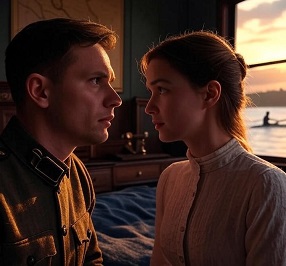 Those unusual marriage proposals ended with a sudden flurry of wedding plans. Before they reached Piotr’s plot of land, they already knew they would wed the next Christmas, had chosen their witnesses, and decided who would be invited to the wedding celebration.
Upon arrival, it turned out that Piotr’s father had cycled off to who-knows-where, while Ania, overcome with emotion at the prospect of the upcoming wedding, couldn’t hold back her sobs. He sat beside her, stroking her straight hair that fell over her shoulders, wiping away the flowing tears with his hand. She pressed her entire body against him, and he, mindful of the lesson Danka had taught him, did not push her away.
But the romance faded quickly thereafter. Despite the many days they had spent together, they grew apart in a way that became increasingly evident, even as they continued planning their marriage. Piotr’s mother did not hide her disapproval—nay, her outright outrage—at this relationship. To her, the girl was not suitable material for a daughter-in-law; the very thought of a wedding felt like an apocalypse. In conversations with her son, she openly accused Ania of immoral behavior, a cold attitude toward faith, and a noticeable air of superiority. Ironically, her son inwardly agreed with much of this, excusing the girl only to maintain peace at home.
When he first held Małgorzata’s photograph in his hands, he had no inkling that among the hundreds of thousands of pictures that had passed and would pass through his hands, this one would one day hold special meaning. Just a photo, like any other… some family gathering, unfamiliar faces around a table, and in the foreground, a pretty girl with short-cropped hair whispering something into the ear of a young boy. The caption intrigued him: “This is me with my little boy.” The picture was merely an enclosure with a letter she had sent to Piotr, the biotherapist and masseur, asking for help with her ailing mother. They had met for the first time several years earlier. He barely remembered that day…
The elderly woman had already visited another healer and returned with what amounted to a death sentence. Her end was said to be near. Piotr, fresh from completing his medical studies and several other “mysterious” schools, hungered for a spectacular professional success. He also loved to help, and the fact that the girl was pretty… well, that was just a minor detail.
They met a few days later. He arrived late, nervous about the impending meeting with the girl… utterly flustered, unsure if he had the courage to approach her. He watched her from a distance as she stood, shivering, beneath the Zygmunt Column, hesitating… When it was all over, he remembered nothing—not what she was wearing, not even what they had talked about.
Strange. Piotr was engaged at the time. His fiancée lived very far away, so they rarely saw each other, but none of those meetings could compare to his encounter with Małgorzata. He looked forward to seeing Anka, rejoiced at her presence, even dreamed of their next meeting, but none left him as flustered or dazed as that moment with Małgorzata on Warsaw’s Old Town. He learned the content of their conversation only from the letter she sent later. She wrote that they had agreed to meet in Janów Podlaski. Further in the letter, it was clear they would rendezvous at her home and then go to tend to the elderly woman.
It was a late February afternoon in 1996. From Warsaw’s Stadion station, he boarded a weathered bus that, after a few hours’ journey, would take him near the Belarusian border. As long as the packed passengers warmed the interior, the trip was bearable. But dozens of kilometers before the destination, the bus emptied out, and Piotr, leaning against the cold window, fell asleep.
“Sir, sir,” he heard a persistent voice coming from above. “We’ve arrived, time to get off.” The driver tried to rouse the sleepy thirty-something. Indeed, they had reached their stop. Piotr slowly regained consciousness. Standing up was not easy—his entire sleeve had frozen to the glass.
Moniuszki 6—no GPS or Google Maps could guide him there in those days. Yet Piotr didn’t need to ask for directions. Before leaving home, he had thoroughly studied the layout of the unfamiliar village and memorized the route step by step. From the bus loop, turn onto Przechodnia, then right onto Brzeska… yes, that tall, white house. He remembered well: don’t climb the stairs, for they say it’s haunted. He had to enter the ground floor, or rather the basement. He knocked. After a moment’s wait, the door creaked open, revealing her—a dark-haired girl with short locks. She wasn’t dressed up. Just everyday clothes, as if she had been bustling around the house all day. Piotr hadn’t arrived in a suit with a flower in hand either. This was a routine visit from a therapist who had traveled far and needed a place to rest and sleep.
“Strange apartment,” he thought. From the very low hallway, paths branched in two directions. Almost immediately to the right of the door, stairs led up to the high ground floor, where Małgorzata’s sister, Maryla, lived. As Gosia later explained, Maryla used that route only when dashing downstairs to start another argument. Straight ahead, after descending two steps, one entered a large, warmly furnished room. One wall adjoined a space serving as a boiler room; to the left, Małgorzata had carved out a small nook for her five-year-old son with her own hands. Further to the left was the kitchen. The bathroom—the bone of contention between the sisters—lay opposite the stairs, parallel to the hallway. Though the low ceiling could brush against one’s hair, the space exuded care, warmth, and good taste, tinged with a hint of melancholy.
After showing her guest around the apartment and arranging some food, the hostess invited him to sit in the kitchen, where, despite her kitchen tasks, they could talk undisturbed. They didn’t leave even when she had finished her chores. Sitting on the popular “corner couch” by the table, he listened, she spoke. When she finished, the sun was rising. In those hours, it seemed she had poured out her entire life to a man she had barely met.
“Seemed” is the right word, for though her words encompassed much, absorbing it all was not easy. To hear a stranger’s life story in one night—about unknown people in unknown circumstances—was hard to comprehend. Not that Piotr didn’t try. Long after leaving Janów, he pondered, for instance, how Gosia had parted from her husband, and how her son Paweł still missed a father. Lost in sympathy, he didn’t even notice that both the girl and her child bore the same surname as her parents. Nor could he grasp the strained relationship between the sisters, forced to live under the same roof despite clashing characters, values, and ties to relatives. But that didn’t matter. It was enough for him to sense that she was a good soul, deeply wounded by the outside world and her money-chasing sister.
Though dawn broke outside, they agreed they needed some sleep. Małgorzata, true to Polish hospitality, made up the large room for her guest, retiring to the child’s room herself, as Pawełek was staying with his grandparents.
They had planned to sleep until nine. Piotr woke a bit earlier. The slightly awkward circumstances of a new place prevented him from sleeping too long. Trying not to make noise, he slipped to the bathroom, dressed, and… waited. “Oh no, I overslept—maybe she’s already gone,” he thought, peeking into the small room. Facing the door stood a wide bed. Almost entirely covered by a quilt, only a head and… an entire left leg peeked out. The quilt revealed enough that Piotr retreated silently to the hallway. “If I wake her, she’ll think I came in just to gawk,” struck by this worry, he sat in an armchair and tried to doze off again.
They left the house only before noon. Just after stepping onto Brzeska, Piotr saw little Pawełek for the first time. The boy, a true “bundle of energy” with a mop of curls, was riding down the street on a small white bike and, delighted to spot his mother, suddenly turned to greet her. Moments later, he sped off again.
“Aren’t you worried about him? Five years old and running loose on the street?” Piotr was shocked and disgusted. Gosia’s dismissive reply did little to calm him. He had grown up in a home where such behavior would have been unthinkable. After a moment, they continued their walk.
The elderly woman was not nearly as ill as claimed—certainly no threat to her life. The tragic diagnosis from the healer must have been a result of his greed and emotional manipulation, a ploy like “pay up, and I’ll save her.” Who wouldn’t spend their last penny to save a loved one?
After the biotherapy session, a long massage, and a hearty meal, Piotr headed to the bus, with Małgorzata accompanying him. At the wooden gate separating their private world from the small square in front of the church, she asked:
“So tell me, how is she really?”
She clearly thought the conversation held at home was meant only to comfort her mother. Convincing her otherwise—that her mother faced no danger—was not easy.
“You know, in biotherapy and massage classes, we had a wonderful lecturer, Mr. Aleksander Wierzbiński. I hope he won’t refuse to see your mother. I’ll give you his number,” Piotr offered. After listening to a long tale about the myriad virtues and miraculous qualities of the mythical therapist, she agreed to the suggested contact without hesitation.
The following weeks, filled with daily life, caused Piotr to nearly forget about Małgorzata. The strained relationship with his fiancée, quarrels at home, and shifts at the clinic in Nowy Dwór Mazowiecki completely occupied his mind. He might have forgotten her entirely, were it not for that low-quality photo with the caption “This is me with…”
It was mid-April when Piotr received an unexpected letter from Janów. The envelope bore no return address, just a kind of signature: “Gośka.” For some reason, he tore it open quite energetically and began reading:
“Hi Piotr, do you still remember me? You visited my mom in Janów…”—how could he not remember? Though, on the other hand, it seemed irrational: a patient like any other. He had seen many, though usually they came to him. Małgorzata went on to describe her meeting with the therapist recommended from Warsaw, expressing hope and faith that her beloved mother would live. She was enthralled by Aleksander Wierzbiński but ended with a question: would Piotr himself not like to visit again? How could he not want to? He didn’t know why, but the invitation thrilled him immensely. Noticing this, he tried to find some justification: “I must help since she asked again. It’s nice,” he reassured himself. Like any novice, he valued the visible results of his hard work.
With some time before his clinic shift, he planned to go to the post office and call. Yes, a good idea—letters took too long… But what good was the idea if no one picked up the phone on the other end? Piotr had to go to work without getting through. And why couldn’t he focus on the problems of the patients before him? Why did his thoughts keep wandering 200 kilometers away? His distraction must have been noticeable enough that Marzena, working at the same clinic, remarked: “What’s with you today, so scatterbrained?” she asked bluntly. There was no reason to hide it—he told the woman everything: the meeting, the letters, the treatment of the elderly lady…
“So why don’t you call from our phone?” she asked, genuinely surprised. He hadn’t, fearing that every long-distance call would cost too much, and he didn’t want to burden the private clinic with expenses. But this time, he didn’t resist for long. Just as months earlier, when he met Małgorzata under the Zygmunt Column and moments later remembered nothing of the encounter, so now, after hanging up, he knew only one thing—they had set a date for May 1st.
“Mrs. Marzena, I’m going to Janów in three days,” he mumbled, turning to her.
“Yes, I’ve been here the whole time,” she replied with a smile.
“The second and third of May are free too, so you might stay there a bit…”
“No… probably not. This time I’m going in the morning and coming back the same day,” he said decisively, though a sinful thought crossed his mind—that he might stay until the next day. He savored it briefly before dismissing it as entirely unfeasible.
The journey, as planned, began in the morning and, thankfully, did not end with him frozen to the window. The day was sunny and unusually warm. Małgorzata was waiting for her guest at the bus loop, from where they went straight to her parents’ house. Lunch, a massage, a session, a moment of conversation—and the last bus of the day had already left. He would have to stay until the next morning.
“No harm that turns out good,” he consoled himself aloud, though he was troubled by the thought that his parents, who had no phone, would worry about his delayed return. “At least I can tend to your mom again tomorrow,” he added.
“Tell me, how was Aleksander Wierzbiński’s visit?”
The girl laughed: “He came only because he didn’t know it was so far. He thought it was that Janów just outside Warsaw.”
“But did he help at all?”
“He did something, though I don’t know what. He said you could continue. But the best part was at the end. After leaving my mom, he did something over my head… on his own, I didn’t ask. I don’t know what it was, but for three days I felt like I was reborn. I looked at the world with new eyes—full of joy and optimism,” Małgorzata spoke as if in a trance.
“And…?”
“Nothing. After three days, it ended, and the old, sad reality returned.”
Talking like this, they reached the house on Moniuszki. There was still plenty of time before evening, so Małgorzata suggested a bike ride along the Bug River. He agreed. They went as a trio. “We look like a happy family on a picnic,” Piotr thought, who had long dreamed of a small white house with a wife and children—especially children. He could do without a wife, but then where would the children come from? Eight years had passed since he parted from someone who once filled his world. No, it wasn’t the girl with whom he had planned to build a happy family—that wasn’t possible. She, however, had satisfied his hunger to nurture and care for someone. For years, he had protected her from making mistakes; when she might have fallen, he fell himself to spare her a bruise. He shielded her from the world. The girl gazed at him like a picture, he always near. No wonder strangers began to assume they were engaged. They weren’t and couldn’t be. Piotr knew that one day they would part. He saw himself in the role of a kind friend, confidant, perhaps even a nanny to her children. It turned out differently. Tempted by silver, she turned the world against him. Suddenly, alliances shifted; old enemies became her new allies in tearing down her former guardian. The breakup had to come—he reconciled himself to that thought. More than that, he awaited it as a natural course of events. But why like this? How could she? Where was her conscience? Her heart? The truth? Had he misjudged her so badly after five years? Could someone change in a single day—or had he seen only what he wanted to see?
A nervous breakdown followed, depression, an unsuccessful suicide attempt, and long nights filled with tears and prayers. Prayers first for a swift death, then for the gift of fulfilled dreams. Those dreams were grand and bold. In a small, modest house, a smiling wife bustled about. Under the window with curtains stood a table, a platter on it. Beyond the curtains, on the windowsill, childhood potted plants. Around ran four children. He couldn’t see their faces, except for one—a girl named Rozalia. She not only had a chosen name but also every detail of her physical appearance meticulously crafted in his mind. They would run to him, chattering… happy, content.
Years passed, God remained silent. Hope faded. Not long ago, after the tragic earthquake in Georgia, there was talk of Polish families possibly adopting Georgian children. Unfortunately, as a bachelor, Piotr had no chance. For years, he had carried an image of his dreamed child, a chosen name. He longed for it so much, though, seeing no prospects, he was willing to settle for raising someone else’s child—his own in spirit. Now, he tied his future to Anka, but… could she have children? A marriage without children would feel so empty…
When Piotr and Małgorzata returned that evening, history nearly repeated itself: the kitchen “corner couch,” long monologues, tears, memories, hours slipping by. It would have been a repeat of their conversation from weeks ago. It would have, were it not for one detail. One they later promised each other never to tell anyone.
It was past midnight when they moved to the room. Right by the door stood two comfortable armchairs, between them a table covered with a lace cloth holding a vase of garden spring flowers. As the first notes of music drifted from a distant radio tower, Gosia brought out wine and two fitting glasses from the cabinet. Piotr knew he had little experience with alcohol, but in these circumstances, he couldn’t refuse… After the first glass, he felt like offering Małgorzata a massage. After the second, he decided to voice the proposal. She agreed without hesitation. Nearly the entire floor was covered with a gray rug, resembling the skin of a large ram. There was no massage table, so she spread a blanket there and lay down, waiting for the first touch of Piotr’s hands. He struggled to maintain the last vestiges of professionalism, but that slender, bare girl lying on the floor… He had massaged many before, often joking inwardly about the fuss shy teenage girls made about undressing—mere “pieces of meat,” as he would say. That was always the case, until now. Now, that “family” outing to the meadows, and especially the alcohol buzzing in his head, made it impossible not to notice her enticing figure. He forced himself to stay in control. He approached, knelt over the lying figure. He poured warm oil onto his hands, rubbed them together, and began gently spreading it across her back. Starting from the tailbone, slowly along the spine up to her neck… Another pass along the same “route,” but wider this time, until her entire back glistened with the slick, warm liquid. Now he could press harder. First, circular pressures above the buttocks, then half-circles over the pelvis, and again along the spine—stronger each time. After twenty minutes, as Alek Wierzbiński had taught, gentle strokes followed. In the same order: first close to the spine, then further out, until, after a few passes, his hands lifted over her breasts pressed to the floor. Małgorzata sighed softly, and Piotr felt her body rise slightly, giving the masseur more space…
“How do you see us?” Małgorzata asked as they were about to fall asleep. The question completely startled Piotr. Yes, he liked the girl very much, but he never thought he had any chance with her. It had happened, alcohol had played its part, his fiancée would never find out… a memory for lonely moments. “How do you see us?”—since she had asked, he immediately declared so-called “serious intentions.”
“But you must first resolve things with Ania,” she reminded him of his fiancée.
“Of course,” he replied, feigning sleepiness. On one hand, it wasn’t a big problem, as his relationship with Ania had been tense for some time. They had broken up several times before, only to reconcile each time. They differed in everything, united perhaps only by a desire to start a family. She, the daughter of a militia officer, dreaming of a judicial career, looking down slightly on her future husband, and he, an anti-communist underground activist, looking down on her in turn. He knew this union was entirely against reason, wanting to escape it as far as possible. On the other hand, he couldn’t bring himself to end it definitively. The girl was disabled after a series of complex spinal surgeries and noticeably limped. That wasn’t a major issue for him, but she had deep insecurities because of it. Piotr lacked the courage to tell her about a final breakup, as every difficult conversation ended in tears and self-criticism: “Because I’m ugly,” “because I’m a cripple”… No, her disability didn’t bother him. He felt suffocated in the relationship but lacked the strength to break it off decisively. Now, that strength lay beside him. Suddenly, he felt wings growing, his future brighter than he could have imagined. Already that unforgettable night from May 1 to 2, 1996, after hearing “how do you see us,” he knew that this girl would be his wife, the one with whom he would spend every following moment of his life.
Suddenly, he forgot that what he had waited for most in life was a child—that dreamed, longed-for child, crafted in every detail in his mind. Now he saw himself not only as a father but also as a husband. No, after a dozen or so hours of acquaintance, he hadn’t had time to fall in love. The events of that night held no significance either. He had simply felt unhappy, betrayed, hurt in life. Always seeking closeness, warmth, or a community of goals and values, he suddenly saw it all in Gosia and felt how close she was to him. She would be the one with whom he would rest in a shared grave after they faced the world together, raised wonderful children, and grew old together.
Piotr returned home only on Friday, May 3rd, and already scheduled a meeting with Ania for the following Saturday. His plan was simple: he would use the first opportunity to finally end this long-exhausting relationship. He didn’t need to scheme—he knew the opportunity would come quickly. They would meet, start talking, Ania would mock his lifestyle or views, a quarrel would erupt, and it would end in a definitive breakup.
The day was sunny and exceptionally beautiful. Ania, as always at the train station, greeted her beloved with a joyful smile and a warm hug. “You know, I have a surprise for you,” she teased with a flirtatious smile. “Right after lunch, we’re going to Kraków,” she revealed. The situation grew complicated. He hadn’t planned on a joint trip, more hours spent together. He felt like a criminal plotting a misdeed while still using his future victim.
Ania’s parents were very kind people. Her father, Ryszard, despite certain traits acquired in the repressive apparatus of the PRL, tried to act warmly and with dignity at home. His demeanor carried a certain air of stateliness. Her mother fulfilled the typical role of a wife and mother. Hosting her daughter’s suitor, she couldn’t hide her concern for the future of her only child. Both were very polite, unobtrusive, discreet. They seized every chance to leave the young couple alone, with an unspoken hope for a swift wedding.
“Eat faster, we need to go,” Ania urged.
“Aniu, what have you cooked up?”
“I told you—surprise.”
There was no point in asking further. Piotr knew she always had to have her way. That was one of the things that made him dread their future. He could have started an argument here, but how does one quarrel over a surprise? So he obediently got into the “Maluch” and let her lead him into the unknown. They drove fairly quickly, though Ania, true to her law-student nature, obeyed every rule. Even on a straight, deserted road, if she spotted a “Stop” sign, she naturally came to a halt. Piotr admired her skillful driving of this car. The vehicle was adapted to the needs of a disabled driver—all functions typically handled by feet had been moved to the steering area, so capable hands were entirely sufficient for driving.
“Aniu, where are we going?” he asked timidly, noticing they had veered off the route to Kraków.
“I told you about the surprise, but there are two surprises.”
He should have been excited about the surprise, but this time he couldn’t muster any joy. These “surprises” felt unwelcome, even against the girl’s good intentions to plan a pleasant day. After all, their meeting was meant to be brief and end in a final breakup. Instead, they were driving into the unknown, talking about plans for the future, a long, happy life together. Piotr felt that such behavior bordered on contempt. What was worse—giving false hope to a sick girl now, or telling her a truth she couldn’t accept and interpret properly? He didn’t know the answer, so he played along, deeming it more humane.
After some time, they entered the area of a small mountain town. The car stopped at the gate of a grand building; Ania turned off the engine. They had arrived. “Who has she dragged me to now?” Piotr wondered, not fond of unannounced visits. He said nothing, however, and obediently followed her into the yard. His companion didn’t ring the bell but pulled keys from her bag and opened the door as if it were her own.
“Whose is this?”
“My father’s,” she answered. “It’s a summer cottage in the mountains, away from the city. Dad plans to move here with Mom, leaving us their apartment in the city.”
“Don’t you think I should have a say in this?”
“Well, what’s there to discuss? I’ll work here. We can’t live in Warsaw.”
Ania saw nothing unusual in this exchange. She had clearly thought it all through, planned it—likely with her father, whom she, as an only child, had always shielded from the world. This visit to the “cottage” must have been his initiative, showing the future son-in-law a secure future after the wedding. Piotr’s guesses were confirmed by the course of their visit. Upon entering, Ania reminded the accompanying “barbarian” to remove his shoes, then showed him around the rooms, detailing the furnishings, and declared: “Well, I just wanted to show you this house. Now we must head to Kraków.”
There was no sense or need to argue. Stranded in some town whose name he didn’t even know, on the edge of the country, he had no desire to be left alone on the street. And Ania, who was so thrilled mentioning the “surprise”… No, he didn’t have the heart to hurt her now.
By late afternoon, they reached their destination. However, it turned out the promised “surprise” was still premature. Piotr had already guessed its nature. They had been here before, last fall. Yes, without these circumstances, he would have enjoyed it. They both loved looking at Kraków from the heights, feeling the wind in their hair, that irreplaceable hint of risk. Not today.
“Come, I’ll show you something,” Ania tugged her fiancé’s hand and led him toward what resembled an abandoned park on the slope of a hill. All around were numerous trees, neatly trimmed grass, in the distance only the faint thread of the Vistula. Nothing and no one disturbed the peace.
“Do you like it?”
“It’s pleasant here.”
“Do you see that tree?” Ania nodded toward a nearby linden.
“And…?”
“I was here once with an old boyfriend. Right under that linden… you know…”
“…”
“Come on, let’s do it again…” she insisted clearly.
“No, Aniu, that’s sick. You’ll have to ask your ex for help.”
“Don’t be silly. You know that’s long over, and I want it with you. Anyway, we need to talk about these things.”
“Is something missing?”
“Not now. It’s wonderful, but you know, I’m sick, and every man has those needs until old age.”
“Aniu, that’s not the most important thing in life!”
“I want you to know that if I can’t, I’d only ask that you love me. I won’t mind if you…”
“What are you saying?” Piotr began to feel very uneasy. He couldn’t and didn’t want to discuss such topics, let alone the suggestions she made. What she had said so far was nothing compared to what she was about to say next. “I’d even gladly pay a woman to keep you happy,” she declared.
Piotr stepped back a pace. He wanted to see the girl’s face clearly. Was this some foolish test, perhaps a joke, or…? Ania kept talking impulsively, only noticing after a moment that her words were met with no signs of joy or praise. She had tried so hard, wanted to be good to him, offered what no woman would agree to, and it didn’t suit him! “So what do you want?!” she snapped angrily.
“Aniu, this is sick,” he repeated. “You see, I love you, but love alone probably won’t be enough to live a good life. We come from different worlds, have different values, different goals. We don’t fit together. I think it’s better to realize this now than later. There are constant quarrels, misunderstandings. You don’t like my behavior, I often disagree with yours. This idea of yours—your ‘sacrifice,’ proof of love, an investment in our life together—is, to me, utterly unbelievable, something that makes our life together impossible.”
“Piotr! What’s wrong with you?! What did I say or do wrong?! What’s this about?”
“Aniu, didn’t you notice that you reduced me to the level of an animal? I have to tell you—more than once, the thought has crossed my mind that we have no future,” he confessed, slowly moving toward the path. Seeing the girl follow him, he added: “I believe there are behaviors that come from deep within us, simply from the upbringing, the values and views instilled in us. I love you and believe it’s mutual, but that won’t be enough—we’d destroy each other. Aniu, this makes no sense. Which way should I go to the station?”
“Is this the end???”
“Rather…” He didn’t have the courage to say it more forcefully. Never in his life had he imagined that he would be the one causing a breakup.
“Let’s do this: I’ll drive you to the station. You go home, calm down… everything will be fine,” Ania already had a new plan. When they reached the station parking lot, she got out of the car almost completely relaxed. “Go on alone now. You need some solitude. Call me if you miss me.”
The girl didn’t wait for confirmation. Satisfied with his lack of denial, she drove off after a warm hug.
2. Małgorzata in Janów
Meanwhile, the very next day, Piotr dialed Małgorzata’s number.
“Hi Gosiu,” Piotr whispered into the receiver as soon as he reached the first working phone booth. “I’ve just had a tough conversation with Ania. It wasn’t easy, but it’s over.”
“So what did you tell her? Does she know about me?”
“No, I didn’t have to tell her. Our relationship would have ended today even if you weren’t in the picture. This has nothing to do with you. I never want to talk about it. It’s finished.”
Indeed, Piotr felt that everything was over. The shocking words he never expected, not even from Ania, still echoed in his ears. On the other hand, they provided an excellent opportunity to part ways under circumstances that couldn’t be linked to the girl’s disability. Despite everything, he felt free—above all, happy and incredibly excited. His thoughts were already with Gosia and Pawełek. They had to succeed, because who ever heard of planning a wedding after just three days of acquaintance? It must have been fate and the will of Heaven. True, they had met once before… but what did that matter when he barely remembered that day? Now, a few hours spent listening to Małgorzata were enough—not only to agree with her on everything but to decide on a life together. He had no doubts that, recounting her adventures year by year, Małgorzata was sincere. She spoke from the depths of her heart, so logically, so movingly… “She’s deeply wounded yet very emotional,” he thought, and this thought only strengthened his conviction that he had found the perfect candidate for a wife and mother to his children.
Subsequent events unfolded at an unprecedented pace. Right after returning home, Piotr began the process of familiarizing his family with Małgorzata: frequent conversations about her, mentioning her at every opportunity, or even her absence. He feared most his mother’s reaction to the news that Małgorzata already had a five-year-old son. True, he knew more about it than anyone else in the world, but he didn’t dare make confessions at this stage. For now, the version Małgorzata had crafted for her family would have to suffice: while working in Warsaw, she had been raped by an unknown man—a story many found acceptable.
To his surprise, he noticed that his mother received the news of the new girlfriend with great relief and joy. The fact that she had an illegitimate child didn’t bother her.
“If she didn’t kill it, gave birth, and is raising it, she must be a decent girl,” she summed up succinctly.
At that moment, Piotr needed nothing more for happiness. All the fears he had about marrying Ania dissipated so quickly; now he stood before the prospect of a life with a woman he understood so well, who accepted him as he was. And finally—the most important thing—she had a son!
A period of frequent travels and weaving plans for the coming weeks or months began. Gosia’s first visit to Legionowo left a lasting impression on both of them. For him, it was meant to be a turning point. Here, to his home, to his family, came his future wife. A special day, a unique day, and the joy of that day had to be shared by everyone—especially Czarek, who had been a substitute for Piotr’s own child until now. If Czarek was special to him, then it had to be the same for Gosia. It was so obvious that it didn’t even warrant a moment’s thought. In a marriage, it’s important to share the other person’s emotions. Three days earlier, Piotr had announced to his sister that, while picking up Gosia in Warsaw, he would bring her son along.
They arrived at the Warsaw station without issues and, naturally, well ahead of schedule. And that “ahead of schedule” turned out to be a serious problem.
“Pee!” the two-year-old demanded suddenly in a tone leaving no room for doubt. The bus from Janów should have arrived by now. At the platforms, a swarm of people jostled in every direction, and the prospect of standing in line for the restroom loomed. “No fools here,” Piotr thought and pulled the boy toward some nearby bushes.
“Czaruś, pee quickly,” he instructed. Czaruś carried out the command fairly efficiently, but when they returned, the bus had naturally already arrived—and it turned out it wasn’t him waiting for Gosia, but she for him. Oh well. They greeted each other warmly and headed toward the city bus.
Gosia’s next visit to Legionowo also stuck in Piotr’s memory, though for an entirely different reason. Knowing that his future mother-in-law suffered from degenerative disease, the girl had prepared two large bottles of living and dead water to gift her.
“Look, it broke,” she pointed, distressed, at the wet bag, and Piotr felt that this girl was taking up more and more space in his heart at that moment. Yes, he hadn’t been wrong. He had never sought perfection, and yet he found it! Could one want more than sympathy between a mother and a wife? Surely, that was the recipe for a harmonious life.
The next meeting had a special character. Piotr arrived in Janów with a special mission. He had meticulously planned this day, or rather evening. It was to be unforgettable, unique, one of a kind. Late that evening, after the treatments for Marianna Andrzejuk, they sat together in armchairs, and Piotr asked for champagne glasses. He knew Gosia liked it. In the dim light of a lamp, he handed her one filled with the drink. They sipped slowly, talking about everything. Yet he never stopped observing her closely. At one point, he noticed Małgorzata spotting something in her glass. As she fished it out with a fork, he knelt before her and posed the sacramental question: “Gosiu, will you be my wife?” She must have expected the question someday, but now, in this moment, her genuine surprise was unmistakable. Holding the gold ring between her fingers, she looked at Piotr and, with all seriousness in her voice, answered decisively: “Yes, I will be your wife.” And he, though certain of the answer, felt another miracle unfold in his life.
The approaching morning was the first in the history of their engagement. For Piotr, it was strange for another reason too. Just a month ago, he had a fiancée, a set wedding date… Oddly, how different this feeling was from what he had experienced then. This time, happiness was complete, unmarred by any fear or doubt. He simply soared to the heavens.
“Do you know what I was thinking about last night?” Gosia asked after waking.
“About us?”
“How did you know?” she laughed sincerely. “But more specifically, you know…”
“Well, I don’t know,” her fiancé teased.
“Because if we’re getting married, we need to do it very soon.”
“I could do it today!”
“Oh, don’t joke, I’m serious. You see, my parental leave will end soon, and I have to return to work in Warsaw. If we were already married, we could rent a place nearby.”
“Perfect, but there’s something you should know,” Piotr revealed to Gosia that he had already discussed this situation with his mother and received an offer to temporarily live with them in Legionowo. Yes, it would be tight, as the three of them would have only one small room, but it would be a transitional arrangement allowing them to save some money. After a brief discussion, they both agreed this proposal could work for the start.
From that morning, preparations for the wedding, the reception, and talks about the future filled their every moment.
“Gosiu, we need to get Paweł used to something…”
“To what?”
“I’d prefer if my son didn’t call me ‘sir’ anymore, and I’d like to be listed on his birth certificate.”
“Then we’ll have to start getting him used to it,” she said with a smile. There was no issue with that. The very next day, Piotr heard for the first time in his life a child call out to him, “Daddy.” Another dream came true.
By evening, they had also agreed to officially repeat the engagement in front of family, set a wedding date, and even discussed the color of the groom’s suit. Both lived with a vision of a happy future.
“Mrs. Marzena, you’ll be invited to the wedding,” Piotr announced as soon as he entered the “Pod Dębami” Clinic.
“And when are you planning it?”
“How did you know it was my wedding?”
“You could feel it coming for a long time,” she laughed. “When?”
“End of August.”
“We’ll see, but I might be on vacation then. Oh well…”
Piotr wasn’t pleased, as he wanted to invite the whole world to share his happiness. That couldn’t exclude Mrs. Marzenka, with whom he had worked for so long. What could he do… At least Jacek didn’t back out and, on the way, promised that if the wedding happened, he would definitely attend. That day, he arrived at the clinic with Piotr. It was another day of his internship as a healer. A woman with a child was scheduled for ten o’clock. They had to hurriedly prepare the office, change, and pretend to focus on the patient’s issues.
The woman arrived almost on time, but the “child” turned out to be a strapping sixteen-year-old suffering from persistent headaches. Numerous therapies by doctors of all specialties had yielded no results, so the mother decided to grasp at the last straw and brought her son to the healer.
“Please, ma’am, sit on the couch, and you stand here in the middle,” the biotherapist instructed the boy and began his typical professional examination. Suddenly, struck by an unusual, seemingly absurd thought that he theoretically should have dismissed, he asked Jacek to examine the patient. The intern, as expected, did as requested. After a moment, he stepped back, signaling to his colleague that he had something to say.
“Paraphrenia. Paraphrenia or…” he whispered.
Piotr felt himself pale. They hadn’t consulted each other; there were no rational grounds for such a diagnosis. They had never had a patient like this before, and… Jacek didn’t finish, but Piotr guessed what he meant. Yes, it wasn’t paraphrenia; it was…
The boy’s mother noticed something unusual had happened in the office.
“Can you help him somehow?” she pressed, clinging to the last shreds of hope.
“Ma’am, I will treat your son, but on one condition.”
“Yes…?”
“Please leave now, go with your son to the church, ask the priest for confession and Holy Communion for him. Then return to us.”
The mother showed no surprise. She solemnly promised to do as requested. They left and… didn’t return.
“Did you have to scare her with a priest?” Jacek didn’t hide his indignation.
“What else could I do? I had to.”
Both were convinced the woman had decided it wasn’t worth wasting money on charlatans and would never come back. They were wrong. She returned, but only after several weeks. That same day, however, another dose of emotions was provided by a woman from Mr. Kulesza’s flower shop.
“Mr. Piotr—CONST Piotr, how does this biotherapy work?” she asked. “Does it need faith for it to work?”
“Honestly? I don’t know how it works. I do know it does, and faith in the effect matters little. Once, I treated a dog. It’s unlikely a dog believes in the outcome of my treatments, yet it was healed.”
“You see, my husband doesn’t believe in these things, and he has hiccups…”
“Hiccups?” Piotr burst into undiplomatic laughter. “Let him hold his breath for a moment, or scare him good.”
“Yes, but he’s had them for a month!”
“A month? I’ve never heard of that.”
“I wouldn’t have believed it either, but he keeps hiccupping…”
“Bring him here.”
“He won’t come. The old fool’s as stubborn as a mule.”
“Do you have a photo of him?”
The woman rummaged through her wallet and pulled out an old ID photo of her husband. The biotherapist placed it on the counter. He had never worked with a photo before. More than that, he barely believed the stories that one could heal someone this way. But here, there was no choice. With all his being, he imagined a living, real person standing before him. After a moment of moving his hands over the photograph, he felt the man’s entire body, knew where the problem lay, and how to remove it. When he finished, that awareness vanished like a dream, leaving only a vague memory.
“Alright, we’ll see what comes of it. Go check on your husband and see if he still hiccups,” he instructed the florist with little conviction.
He and Jacek hadn’t even finished laughing about the incident when the elderly woman was back.
“Mr. Piotr, Mr. Piotr, imagine this—it’s gone!”
“And? Did he believe?”
“Not at all. The foolish old man said it was a coincidence!”
It might have been a coincidence for the “foolish old man,” but there was another skeptic in the household—Mr. Kulesza, husband of Dr. Danuta. As soon as he heard about the incident, he entered the clinic with a dignified stride and asked:
“They say hypnosis can cure alcoholism.”
“Yes, it can.”
“And they say you can hypnotize someone so they remember nothing…”
“Yes, that’s usually possible.”
“I have such a strong character that it’d be impossible,” the older man teased.
Piotr loved challenges and often let himself be provoked. So it was no surprise that he immediately offered:
“Please, lie down on the couch.”
“And you’ll cure me of smoking?” the man jested.
“Maybe…”
As the unexpected patient lay down, with his wife, Mrs. Marzena, and Jacek craning their necks out of curiosity, the therapist began monotonously: “You’re lying comfortably on a bed. Your whole body is relaxing, unwinding… It’s warm and pleasant. Your feet… you feel the tiredness draining from them, they’re relaxing…”
After a longer while, to check the patient’s state, he suggested: “You’re now lying on a green meadow. Warm sun-heated grass under your back, and a monotonous rustle of trees comes from above. It’s so pleasant. Except for that pesky fly. It keeps buzzing around your face. Please shoo it away.”
Since the patient made no movement, the therapist conceded defeat and decided to end the experiment: “Now I’ll count from one to ten. When I finish, you’ll be awake. Please clench your fists tightly and stand up. One, two…” When he finished, Mr. Kulesza sat up on the bed and, with a triumphant grin, declared:
“See? I told you—I can’t be hypnotized. At least I lay down comfortably. Well, almost comfortably, because some fly kept buzzing around my nose…” he tried to complain but couldn’t understand why everyone suddenly burst into laughter.
“What?”
Any response was cut off by the phone ringing. Mrs. Marzena answered after a moment with her immortal line: “Mr. Piotr, it’s for you.” As he stepped away to take the call, the others, as if on cue, moved from the office to the herbal room.
“Hello.”
“Good day, sir, this is Agnieszka,” came a male voice.
“Good day, ma’am. I saw those giraffes. They were very nice.”
“Oh, thank you. The object is checked. No objections, but the family is very questionable. Please consider it, but the decision is left to you.”
“Thank you very much, goodbye.”
During this conversation, all other chatter ceased, and no one joked about the unfortunate patient anymore. Everyone must have wondered why the caller had such a masculine voice, though they certainly didn’t catch the words, they likely recognized from the tone that it wasn’t a woman. Only Jacek, as they returned to Legionowo by train, gave vent to his curiosity and remained unsatisfied without an answer.
Piotr was not talkative that evening. The words he heard over the phone still rang in his ears. “Questionable family”—what could that mean? That day, he couldn’t find an answer. “Agnieszka,” the person responsible in “Piast” for a sort of intelligence-gathering, had collected as much information as possible about the family of the future wife of an organization member. Was it everything? Certainly not. Piotr, eager to marry, tried to downplay the warnings, though they often returned to his mind. For now, he focused on normal plans. Since his last trip from Janów, he hadn’t even had a chance to talk to his mother, and so much had happened, so much to discuss.
“Mama, could you come to me for a moment?” he asked his mother as soon as he had eaten something.
“Not now. When Ula returns, she’ll take Czaruś,” he heard from his mother, who was tending to her grandson. He had to wait, though he wanted to get it over with. The conversation didn’t happen quickly. Urszula didn’t return, and when she finally did, she had so many things to discuss that, before the evening movie everyone had to watch, there was no time to spare for a talk with her son.
“Has Ula returned so Mama can spare me a few minutes?” he asked again two days later.
“Where was she supposed to return from?” the woman asked with genuine surprise.
“Well, two days ago I asked Mama for a moment to talk. You promised to come when Urszula returned home and took care of her child.”
“Piotruś, are you starting again?”
After that familiar phrase, it was clear there would be no atmosphere for a serious conversation anytime soon. Piotr reconciled himself to waiting for the situation to calm down. He decided to clarify the troubling call from “Agnieszka” in the meantime. A phone call wasn’t an option; he had to visit someone from the “second department,” and since the nearest contact was in Płock, it promised a very long day tomorrow. Today, he still needed to call and schedule a meeting. With that thought, he rushed to the phone booth.
“Hi Iwonka, it’s…” Piotr introduced himself with a pseudonym known to his interlocutor from the martial law years. “I spoke with ‘Agnieszka’ a few days ago, but the giraffes were distracting…”
“Hi. Yes, I know. Then drop by. When can you?”
“I’d love to go tomorrow.”
“No problem. I’ll be home from ten. Come over,” Iwona invited.
Back in the comfort of home, Piotr warned his mother that he would leave early the next day and wouldn’t be back until late evening.
“And where are you off to now?”
“To Płock,” he answered truthfully.
“What for? You’ve got no money to waste?”
“I’m going to invite someone to the wedding.”
“Whose wedding?”
“Mine, of course.”
“And your mother still knows nothing, and…”
Piotr didn’t let her finish: “Mama, I wanted to talk to you, but I’m waiting for you to find time for me.”
“Starting again?”
“That’s what I mean. My matters are ‘starting.’ You have to go now because Czaruś is crying.”
The further conversation, of course, made no sense. The morning brought new challenges. An early wake-up, the trip to the train, waiting for the PKS, then the city bus—thus, he reached Iwona’s block almost at noon.
The information he received was objectively discouraging. Ryszard Andrzejuk, son of Jan, had been an ORMO member in Biała Podlaska until the martial law period. True, there were suspicions it might be a different person, but how many Ryszard Andrzejuks, with Jan as a father, could have lived in the Biała Podlaska area at the same time? Doubts, though serious, had to be resolved against the suspect. It only got worse from there. According to the “second department” report, there were three SB informants and one person likely blackmailed by the authorities in the immediate family. Małgorzata herself, however, had a clean record.
“I’m sorry,” Iwona could find no other words to comment.
“Iwonka, I’m marrying the girl, not her relatives—especially since Gosia has her own opinions about her sisters, brother-in-law, and father. She’s different. You know well that every family has such cases,” he justified. After a moment, he added sadly: “After all, my own uncle was an informant.”
Iwona didn’t comment further, so they easily transitioned to pleasanter topics, namely the upcoming wedding. Piotr knew that no one else from the “family” would attend for reasons well known to him, but Iwona’s presence seemed obvious. He was disappointed. The girl had been dating someone for several months, with whom she had high hopes. In the early stages, she had told him much about her life. In many threads, her old acquaintance, Piotr from Legionowo, appeared. When she noticed his pathological jealousy, it was too late. Now, not wanting to provoke him, she couldn’t even imagine any open contact.
“Well, if you told him how we slept in the Tatras under the open sky in one sleeping bag, he might have gotten suspicious,” Piotr laughed.
“And to think we didn’t sin back then!” she replied, no less amused, but added seriously: “No one would believe it.”
The memories lingered for a long time and might have gone on forever if not for the approaching departure time of the bus to Warsaw. They parted warmly.
3. The Wedding on the Horizon
At home, Piotr was greeted with the usual jabs:
“So maybe you’ll invite me to this wedding too,” he heard as soon as he returned. Knowing the difficult task ahead, he decided not to escalate the tension further. “Well, we need to talk, because there’s a lot to discuss,” he replied.
As soon as they sat on the fold-out sofa, Piotr explained the necessity for Małgorzata to return to work and their plans to live together in Legionowo. He clarified that although the room was small, it was only a temporary solution that would allow them to save for their own apartment. His mother, though initially skeptical, accepted the news with surprising openness. “If that’s what you’ve decided, then fine. But remember, with a child, it won’t be easy,” she warned, referring to five-year-old Pawełek.
Piotr didn’t hide his enthusiasm. “Mom, I already treat him like my own son. You’ll see, it’ll be good,” he assured her. He recounted how Pawełek had called him “daddy,” which brought a smile to his mother’s face, though she didn’t comment aloud.
The following days were filled with feverish wedding preparations. Piotr and Małgorzata set the date for the end of August. They chose a modest ceremony at the church in Janów Podlaski, with the reception at the local fire station hall. The guest list was short—close family and a few friends, including Jacek, who promised to be a witness. Piotr still hoped that Mrs. Marzena from the “Pod Dębami” Clinic would change her vacation plans and attend, but her response was evasive: “Mr. Piotr, I’d love to, but in August, I’ll already be on vacation in Bulgaria,” she explained.
Meanwhile, Piotr had to juggle other responsibilities. Work at the clinic was consuming more time, and new challenges kept arising. One of them was a visit from a woman with her sixteen-year-old son, who suffered from persistent headaches. After a biotherapeutic examination, Piotr and Jacek, his intern, began to suspect something beyond a typical physical ailment. “Paraphrenia or… something worse,” Jacek whispered, pulling Piotr aside.
Though surprised, Piotr decided to act. “Ma’am, please take your son to the church for confession and Holy Communion. Then come back to us,” he instructed the boy’s mother. Though confused, she promised to follow the advice. She left with her son but never returned. Jacek didn’t hide his irritation: “Did you have to scare her with a priest?” he said reproachfully. Piotr only shrugged. “What else could I do? I felt this wasn’t an ordinary case,” he replied.
That same day at the clinic, another unusual patient arrived—a woman from Mr. Kulesza’s flower shop. She jokingly asked if biotherapy required belief in its effectiveness. “You see, my husband doesn’t believe in such things, and he’s had hiccups for a month,” she explained. Piotr, initially amused, suggested she bring her husband in. When it turned out the man was too stubborn to come, she showed Piotr his ID photo. Though skeptical about working with a photograph, Piotr decided to try. He focused, imagining the patient before him, and performed the treatment. To his amazement, the woman returned an hour later with joyful news: “Mr. Piotr, the hiccups are gone!” she exclaimed, though she added that her husband attributed it to chance.
These small successes bolstered Piotr’s confidence, but deep down, he kept returning to the conversation with “Agnieszka”—the mysterious contact from the “Piast” organization. The information about Małgorzata’s family was not encouraging. Her father, Ryszard Andrzejuk, had ties to ORMO, and several family members were suspected of collaborating with the SB. Małgorzata herself was “clean,” which gave Piotr hope that their relationship wouldn’t be burdened by the past. “I’m marrying Gosia, not her family,” he kept telling himself, trying to push the doubts aside.
However, his conversation with Iwona in Płock didn’t dispel all his concerns. “I’m sorry, Piotr, but those are the facts,” Iwona said, handing him the report. Piotr defended his decision, explaining that Małgorzata differed from the rest of her family. “She’s different, Iwonka. She has her own opinions, her own values. I’m not judging her through the lens of her father or sister,” he argued. Iwona only sighed, shifting the topic to something lighter—the wedding. Unfortunately, Piotr faced disappointment here too. Iwona, tied to a jealous partner, couldn’t promise to attend. “I don’t want to provoke him. He knows too much about you,” she explained with a laugh, recalling their shared adventures from the martial law years.
Returning home, Piotr felt a mix of emotions. On one hand, joy at the approaching wedding; on the other, unease sparked by the information about Małgorzata’s family. He decided to focus on what mattered most—Gosia and Pawełek. In Legionowo, another conversation with his mother awaited, who still couldn’t find time for a serious discussion. “Piotruś, are you starting again?” she repeated every time he tried to bring up the wedding. Frustrated, he finally resolved to act on his own.
His next visit to Janów was pure pleasure. Seeing Piotr, Małgorzata threw her arms around his neck. “You know, Pawełek asked when Daddy would come again,” she said with a smile. Piotr felt his heart swell. They spent the day talking, planning, and strolling along the Bug River. That evening, over dinner, Piotr surprised Gosia with an engagement ring hidden in a champagne glass. “Gosiu, will you be my wife?” he asked, kneeling before her. “Yes, I will,” she answered without hesitation, her eyes glistening with tears.
From that moment, everything accelerated. They finalized wedding details, chose witnesses, and even discussed how to integrate Pawełek into their new reality. “We need to get him used to calling me ‘Daddy,’” Piotr suggested. Małgorzata agreed without hesitation, and the very next day, with childlike simplicity, Pawełek called him “Daddy.” For Piotr, this was the moment he felt his dreams of a family beginning to come true.
At work, Piotr didn’t hide his happiness. “Mrs. Marzena, you’ll be invited to the wedding,” he announced upon entering the clinic. “End of August, in Janów,” he added. Mrs. Marzena only smiled, repeating that she wouldn’t cancel her Bulgaria vacation. Jacek, who happened to be in the office, patted Piotr on the shoulder. “Old man, I’ll be your witness. There’s no way I’d miss it,” he assured.
The wedding was approaching rapidly, and Piotr felt everything was heading in the right direction. Even the information from “Agnieszka” troubled him less. “Gosia isn’t her family,” he told himself, believing their love and shared values would help them overcome any obstacles. Deep down, he knew he had found what he had sought his whole life—a family, warmth, and a sense of belonging.
4. The Wedding with Shadows
A few days before the set wedding date, Małgorzata demanded that Piotr spend the last week with her, helping with the joint preparations for the wedding and reception. “I can’t handle all this alone,” she argued. Despite his parents’ firm opposition, Piotr agreed. On August 16, 1996, he was already in Janów. Preparations kicked into high gear.
The Monday morning began with a trip to Biała Podlaska to search for meats and sausages for the wedding reception. Małgorzata’s sister, Irena, accompanied them. She was not only the driver but also the real guide through the shops—and the decision-maker. Piotr joined them in silence, his main tasks being to say “Yes, Gosiu” and carry the bags.
They returned home exhausted. While visiting the bathroom, Piotr noticed some old store receipts in his pocket. He took them out, tore them into tiny pieces, and flushed them down the toilet.
“Piotr, what’s this?” came the voice of his fiancée, locked in the bathroom, after dinner.
“What are you asking about?”
“Those papers in the toilet.”
“Just trash, nothing important.”
“But why in the toilet? Do you want to clog the pipes?”
“I tore them into tiny pieces!”
“Doesn’t matter. Take them out now!” she ordered, and her fiancé complied without a word.
Piotr suddenly recalled the feelings that had tormented him during his relationship with Ania. He had strived for something, even provoked it himself, but at the same time, he feared the future. Those sensations began to resurface, but once again, he silenced them with his eternal “It’ll work out somehow.”
On August 23, the first wedding guests began arriving in Janów. More came on Saturday, August 24. Among them were Piotr’s parents, his sister with her husband and son, and only his cousin Krzysiek and Uncle Izydor Kiliś with his wife from the extended family. Even the godmother was absent.
Janów Podlaski, the home of Ryszard and Marianna Andrzejuk. Outside, guests awaited the wedding procession’s departure. Inside, the young couple knelt, seeking their parents’ blessing. After a brief ceremony, the procession set off toward the church, 200 meters away. It was an unusual sight on the town square, with dozens of people crossing it, the bride and groom leading the way.
“I, Piotr, take you, Małgorzata, as my wife and vow to you love, fidelity, and marital honesty, and that I will not abandon you until death. So help me, Lord God Almighty in the Holy Trinity and All the Saints.”
“I, Małgorzata, take you, Piotr, as my husband and vow to you love, fidelity, and marital honesty, and that I will not abandon you until death. So help me, Lord God Almighty in the Holy Trinity and All the Saints.”
Once the priest fulfilled his duty and the guests, one by one, offered their formal wishes for the newlyweds’ happiness and prosperity, only Jacek Rogala asked the groom a question: “Why were you so serious throughout the Mass?” He received no answer… Those with cars took their seats, while those without boarded a rented bus, and together they headed to Biała to celebrate the happiness of the couple who had just left the altar.
Upon arriving at the venue, there was a moment of chaos—welcoming the couple, taking seats. The newlyweds sat in the center, above them a holy image gifted by Mrs. Marianna to safeguard the marriage’s durability. Nearby hung a large sign: “Your home, my home.” Piotr had preferred “Where you go, Kajus, there I go, Kaja,” but according to Małgorzata, the first better expressed their unity.
The first dance of the couple, followed by others for all, the emcee did his best to entertain the guests, and “Great Love” played from the speakers, as if to enchant reality. The guests seemed to enjoy themselves, judging by the state of some bodies and minds, and they made it to the midnight capping ceremony. After midnight, those who had completely forgotten they were partying in a dry month occupied strategic spots at the table or started more assertive discussions with anyone nearby. It grew later and later.
“Czarek is falling asleep; isn’t there a place to lay him down?” Urszula asked her brother.
The wedding took place in a rented hall, but Piotr recalled they had been given access to a small room adjacent to the main space.
“There’s a place like that; tell Krystyna, she has the key.”
After a moment, the woman returned, clearly agitated. Barely speaking, she confessed to her brother that his new sister-in-law had refused to lend the room, as it stored alcohol for which she was responsible.
“Your sister was accused of stealing alcohol at your wedding,” she whispered.
Piotr didn’t wait to calm down. Spotting his wife in the crowd, he approached and suggested stepping out for a cigarette. She was busy talking to her other sister. “In a few minutes,” she replied.
He waited. He had no other choice.
When they stepped outside, Małgorzata noticed this wasn’t a typical break. Her husband’s agitation was all too evident. He had no intention of hiding the real reason for pulling her away from the festivities. In great distress, he recounted what had happened minutes earlier and returned to the table without a word. He sat alone, far from anyone. Until the wedding ended, nothing else happened. Małgorzata didn’t intervene with Krystyna, didn’t try to clarify the situation, and no one went to apologize.
The next incidents weren’t long in coming. Problems began on the bus as the wedding guests returned to Janów. Barely conscious from excessive alcohol, Wiesiek, Irena’s husband, launched into a tirade of vulgarities against Jadwiga Korycka. He shouted out every grievance the family might have had against Piotr’s parents. As Gosia had once recounted, he had always been a “madman,” but since the accident he caused while drunk, he clearly struggled with mental illness. Yet he remained aware enough to know that his “yellow papers” protected him from criminal liability, allowing him to act with impunity. Every so often, when drunk, he chased his wife with an axe, drove the children from home, and insulted anyone in sight. No one could be blamed for this incident if someone hadn’t previously spread family misunderstandings in his presence.
Only the newlyweds returned to the house on Moniuszki. The rest of the family dispersed to Małgorzata’s parents or her two sisters. The Andrzejuk couple also thought of their daughter’s in-laws, inviting them to stay under their roof for rest. Around ten in the morning, the out-of-town guests began gathering to leave. As with any Polish hospitality, the hostess gifted each departing guest with leftovers from the wedding—bags of fruit, cakes, or sandwiches. This time, too, she didn’t forget that the Koryccys faced a several-hour journey to Legionowo:
“Jadzia, ask Gosia; she’ll give you something to drink,” she advised, but Korycka had no intention of asking for “something to drink” from a wedding she had also helped finance.
Fortunately, the latest news didn’t reach the newlyweds quickly.
“Well, husband, I think we need to get some sleep,” Gosia said to Piotr as soon as they closed the door behind them. Emphasizing the word “husband,” she raised her hand, displaying her wedding ring.
“We do, because we won’t rest long anyway, wife,” Piotr replied, mirroring her gesture.
The brief rest ended unexpectedly pleasantly. Waking first, Gosia brushed her lips against Piotr’s cheek, whispering almost inaudibly: “How good it is to wake up next to a husband… how wonderful it sounds… I have a husband…”
Our family tree has over 10,000 pieces of data. We also have around 75,000 photos and thousands of documents in our collection.
This tree can continue to grow only thanks to the interest and cooperation of close and distant relatives who, finding their relatives here, would like to share their information, photos or documents.
 English

