

 English


 Abt 1658 - Abt 1732 (74 years)
The Heritage of the Curse
Chapter I
The silence of the night had long since settled over the manor.
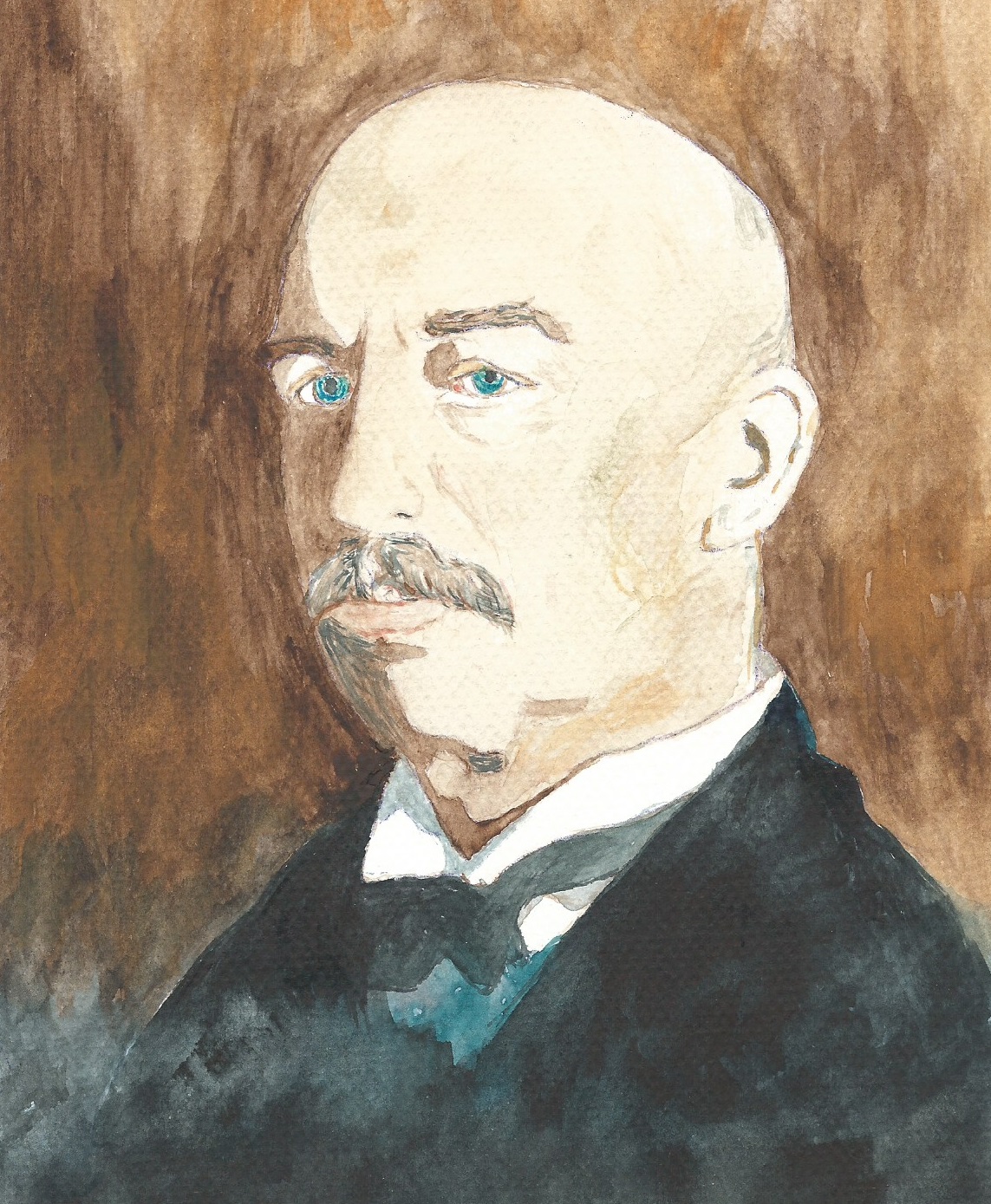
In the neighboring chambers, where his five children lay asleep, not the faintest sound disturbed the stillness. The great dining hall was equally hushed. Only the dying embers upon the hearth cast an occasional crimson glow across the walls. Upon the table stood a bowl of buckwheat groats left untouched since supper. Earthly needs had abandoned Stanisław altogether that night.
Never before had he spoken those dreadful words aloud.
"What remains? How is a man to live now?" he asked himself, and found but a single answer—the road.
Nearly a century earlier his forefathers had departed from their ancestral seat to settle in the northern provinces of the Polish Commonwealth⁷. They had reconciled themselves to the bitter truth that descendants of Lithuanian princes must henceforth live as modest landed gentlemen, no different from thousands of others throughout the realm. Courland⁹, where they had once dwelt, had become for Stanisław little more than a dim remembrance preserved in family tales.
But with what would he depart?
What estate might he hope to acquire at the end of so perilous a journey?
The questions multiplied faster than answers could be found. Yet delay had become more dangerous than uncertainty. Action could no longer be postponed.
Even so, anxiety did not rob him of sound judgment. Whatever course he chose had to be prudent. Only thus might he hope that malicious gossip would once more fail to overtake the name of Kiliś.
He had already formed his design, though he had entrusted its details to no living soul—not even to the brother whom he loved above all others.
Months earlier he had allowed it to be generally believed that business affairs would carry him into Prussia.
Indeed, he set out in that direction.
After three days upon the road, however, he quietly turned his horses southward.
The journey toward the heart of the Commonwealth was neither brief nor easy.
The people of the land had endured too many wars to welcome strangers with open hearts. Long years of bloodshed had taught them suspicion, and many had themselves adopted the harsh manners of those from whom they had once sought protection. Wherever possible, the traveler sought shelter beneath the roofs of manor houses or monasteries, for within such walls a gentleman might still hope to find both hospitality and safety. Yet there were times when necessity compelled him to knock upon the humble door of a peasant's cottage and ask for nothing more than a morsel of bread or a cup of water.
Rarely was he received with kindness.
Not from malice, but from fear.
To those who dwelt in lonely villages he was merely another unknown man whose arrival threatened to disturb the fragile peace they had purchased with years of suffering.
Nevertheless, the solitary nobleman pressed onward.
With every league he crossed, the customs of these unfamiliar provinces unfolded before his eyes. He questioned innkeepers, priests, village elders, and impoverished squires alike concerning estates that might be purchased. Such lands indeed existed, yet the nearer he approached Warsaw, the dearer every acre became. Removal to those regions would therefore demand yet another sacrifice—not merely of wealth, but of rank and standing among the gentry.
Material loss, however, was not the burden that weighed most heavily upon his soul.
He himself, though not yet an old man, often felt profoundly alone.
He had never known the greater part of his own kindred. They remained far away, beyond forests, marshes, and frontiers that for much of the year could scarcely be crossed. Those who had abandoned their ancestral lands were never wholly accepted in their adopted home. To the people among whom they settled, whether nobleman or peasant, they remained forever men from that mysterious and untamed Lithuania.
And now he himself was preparing to condemn his own children to the very same fate.
Whether he had fallen asleep, or merely wandered so deeply into the recesses of his own thoughts that the world about him ceased to exist, none could have said.
It was Marianna's gentle whisper that at last recalled him.
With trembling fingers she passed her hand through the hair that had once been as black as the raven's wing, but had turned gray long before its proper season.
He started almost imperceptibly.
Slowly he raised his eyes, as though fearing what expression he might behold upon his wife's face.
What met his gaze resembled less the countenance of a living woman than that of a figure carved from pale stone.
Her eyes were filled with tenderness—indeed, with love itself—yet upon her face rested an expression he could neither understand nor endure.
During those long hours something had changed within her.
Affection for her husband struggled with fear for her children. Devotion wrestled with uncertainty. Somewhere beneath both lay another feeling, one she herself could neither comprehend nor name.
She had accepted a destiny for which she had never asked.
A burden she did not understand.
A trial she knew she had done nothing to deserve.

Marianna had possessed a resolute spirit from her earliest childhood.
Neither father nor mother, neither brother nor sister, had ever succeeded in bending her will. Thus it came to pass that, being scarcely fifteen years of age, she first made the acquaintance of Stanisław Kiliś, a man eight years her senior.
Within a twelvemonth she astonished her family by declaring, with perfect composure, that he—and no other—should become her husband.
No one opposed her.
Experience had long since taught the household that persuasion availed nothing where Marianna had once resolved upon her course.
Accordingly, in the month of May, 1680, she and Stanisław were joined in Holy Matrimony.
Yet one circumstance remained curious.
Her parents, it would seem, cherished the faint hope that their daughter might still reconsider. Their formal betrothal was therefore not proclaimed until the eighteenth day of April in the following year, upon Easter Sunday itself.
Neither then, nor during the wedding festivities, did anyone reproach the bridegroom for the uncertainty that surrounded his ancestry.
Perhaps those troubled times explain such restraint.
The northern provinces had scarcely recovered from the Swedish wars. Throughout the land men spoke of strange signs appearing in the heavens, and many believed them to foretell fresh calamities. Under such omens few sought new quarrels, and fewer still cared to stir idle suspicions against a peaceful neighbor.
Peace itself had become almost a forgotten blessing.
One year armies marched against the Swedes; the next the Swedes advanced upon Kraków.
Kings were elevated only to be cast down.
Confederations arose with alarming frequency, each professing to rescue either the Commonwealth or the private fortunes of those who formed them.
Fear governed men more faithfully than law.
At length there came a season of comparative quiet.
Hope, frail though it proved, returned once more to ordinary households, allowing people for a little while to forget the relentless winds of history.
Whether it was this brief respite, or merely the circumstance that Stanisław's parents had no daughters while their own children were still of tender years, gossip either failed to arise—or at least spoke in whispers too faint to do harm.
Now, after so many peaceful years, misfortune returned without warning.
And it struck with all the greater cruelty because it had waited so long.
"If that's what you've decided..."
Those few quiet words sufficed for Stanisław more completely than the longest discourse.
"Taip, kūdikis¹," he whispered, drawing a slow breath.
Yet even as relief came over him, uneasiness followed close behind. She trusted him without reserve. Indeed, he had weighed every circumstance within the compass of his judgment—but could any mortal man foresee all that Providence might yet ordain? Would not some unforeseen calamity arise? And should it come, would he prove equal to its burden?
He knew Marianna well.
Throughout the years of their marriage she had more than once endeavored, with a gentleness peculiar to herself, to soften or amend decisions he had already made. Never had she sought contention; yet even her mildest remonstrance had sometimes wounded that quiet masculine pride which every honorable husband carries hidden within his breast.
This time, however, she offered neither argument nor persuasion.
After long hours of prayer and silent reflection she had accepted his decision with but a single sentence.
Stanisław understood all that such acceptance implied.
Had there been debate—had he yielded in any particular—the burdens of whatever misfortune might follow would thereafter have been shared between them. Responsibility would have rested equally upon husband and wife.
Now it rested upon him alone.
Marianna soon perceived that his thoughts had wandered far beyond the room in which they sat.
"Your brothers as well?" she asked, repeating the question more distinctly.
For several moments no answer came save a deep and weary sigh.
"No," he replied at length. "They have chosen to remain. Jan has only sons; he believes himself beyond danger. Niko will not forsake these lands under any circumstances. As for me..." He paused. "I shall never return here. I dare not risk another whisper, another suspicion. Never."
He lowered his voice.
"Someone must remain to care for our mother... to kneel beside our father's grave... to offer prayers for those who came before us. Let them live here in peace. It is we who must depart."
Again silence fell.
At last he spoke once more.
"There is something else you ought to know. My eldest brother, Kazimierz, never truly disappeared. Long ago he journeyed into distant lands. Even now we have kin not far from Warsaw."
Marianna sank quietly upon the arm of his chair, almost at his knees.
Long had one question troubled her heart, yet each time she resolved to utter it, compassion restrained her. She would not willingly add another burden to those already weighing upon her husband's spirit.
At length she found the courage.
"Do you not trust me?"
There was neither reproach nor bitterness in her voice.
Only sorrow.
Stanisław stared at her in undisguised astonishment.
"What makes you say such a thing?"
"We have lived together these twenty years," she answered softly, "and only now do I learn this."
He shook his head with sudden violence, as though rousing himself from some fearful dream.
"No... no, Maryś."
His voice rose almost to a cry.
"There is no soul living who truly understands the curse that has pursued our blood."
For a moment he looked into the dying fire.
"They say it began in the days of Ausztota. Who can tell? I strive to remain a reasonable man, yet there are tales one hears from childhood which refuse to leave the mind. I am sooner inclined to believe another story—that it began with my great-grandfather when he marched beneath Prince Vytautas³. They say the woman he left behind had long been versed in forbidden arts. She could not forgive his departure for war. And when he returned..."
His words faltered.
He could not bring himself to utter aloud that which had driven generation after generation of his house from their native soil.
Presently he resumed in a quieter tone.
"Until now it has ever been the father who, discerning the proper hour, called his son aside and entrusted him with the history of our family. The knowledge seldom altered fate, yet it taught a man how he might preserve those dearest to him from its cruelest consequences."
He reached gently for Marianna's hand.
"No wife has ever been told."
A faint smile crossed his lips.
"You are the first."
He pressed her hand softly.
"Aš pasitikiu. Pasitikiu.²"
Their conversation was interrupted by the cry of a child.
It was the youngest of the Kiliś boys, announcing from the nursery that the hour had come when someone must attend to him.
Within the household he was known simply as Wojtek, though at the baptismal font the parish priest had bestowed upon him the uncommon name Wodzisław, a name scarcely heard throughout Royal Prussia⁸.
No one any longer remembered the reason.
Nor did anyone trouble to inquire.
That Stanisław possessed more than a few harmless peculiarities was accepted by all who knew him.
For many years the children had been tended by an aged woman named Karola.
Long before, she had wandered to the manor little better than a beggar, asking only for a bowl of warm broth. The generosity of the household encouraged her to remain awhile, and during those first evenings Stanisław was astonished to hear upon her lips words belonging to the forgotten speech of his forefathers.
His grandparents, determined that no trace of their former homeland should betray them, had labored to burn every bridge behind them. They concealed even their native tongue from strangers. Only within the privacy of the family did an occasional Lithuanian phrase escape their lips, and as the years passed even those became increasingly rare.
Stanisław himself could now converse only in Polish.
Yet in moments of profound joy—or of deepest sorrow—when the heart asserted dominion over reason, forgotten words would return of their own accord, words which none of his Polish neighbors could have understood.
Karola's tales awakened memories that had slumbered since childhood.
Listening to her was like hearing voices from a homeland he himself had never truly known.
Thus the old mendicant became the nurse of his children.
Never once did he regret the decision.
She earned her bread faithfully.
Yet neither he nor Marianna willingly surrendered the upbringing of their little ones. Whenever duties permitted, they themselves were present at the children's awakening, their evening prayers, and those quiet domestic moments by which families are bound together far more securely than by blood alone.
It therefore surprised Marianna herself that, at the sound of Wojtek's crying, she rose instinctively, took several steps toward the nursery... and suddenly stopped.
She remained motionless.
It was as though she no longer knew what she ought to do.
At length she turned—not toward the child, but toward the servants' quarters.
"Karola!" she called.
Only moments later the old woman was hurrying, almost running despite her years, up the staircase toward the nursery.
More than once she had been the first to greet the waking child.
Never, however, had such a thing occurred while both father and mother remained beneath the same roof.
Never.
Karola entered the chamber with unusual hesitation.
Almost immediately her voice could be heard beyond the half-open door.
"Vardan Dievo Tėvo ir Sūnaus, ir Šventosios Dvasios...⁴"
Thus began the morning prayer.
Marianna returned quietly to the dining hall.
Stanisław, who for hours had scarcely lifted his eyes from the cold stone hearth before him, now turned toward the open doorway leading into the entrance hall. Morning life had begun to stir throughout the manor, and for the first time since dawn he watched the household awaken.
He saw Marianna approaching.
Without speaking she came to him, took his hand firmly into her own, and, with the same gentle determination she had possessed in the days of their courtship, drew him toward the door and out into the morning air.
Karola, defeated at last by curiosity—and perhaps by something deeper still—moved quietly to the window.
She wished only to discover what had become of her master and mistress.
What she saw did nothing to quiet her fears.
Quite the contrary.
At that very moment she resolved upon something she had never before done of her own accord.
She must speak with someone.
Neither the master of the house nor the nurse of his children was the only Lithuanian soul upon the estate.
Beyond the manor itself, adjoining its western wing, a narrow path wound through a thicket of elder bushes. Hidden behind them stood a small and unpretending doorway, leading to the modest quarters assigned to Leszek.
Judging by his appearance, the young fellow could scarcely have reached his thirtieth year.
Yet, young though he was, he had already fathered more children than his master.
Whether one stepped into the little entryway or merely crossed the beaten earth before the cottage, one could scarcely advance a pace without stumbling over some flaxen-headed youngster forever darting beneath the feet of grown folk.
Thus it happened that, as Karola crossed the high threshold in great haste, one such small creature came hurtling toward her like a cannon shot.
Before he could recover himself, the child found his tiny legs hopelessly entangled in the heavy folds of the old woman's long black skirt.
Karola loved children.
Or, to speak more truthfully, she loved the children of the Kiliś household.
Toward all others she entertained little affection.
She regarded them as Heaven's peculiar method of trying the patience of mankind.
The little rogue finally freed himself and remained rooted to the spot.
The two regarded one another in profound mutual disapproval.
She, from the lofty dignity of old age.
He, from the impressive height of perhaps three feet.
Fortunately for him, Karola found herself far too preoccupied to administer the sharp cuff which, under ordinary circumstances, might well have concluded the encounter.
Her business admitted no delay.
She cherished scarcely greater affection for Leszek than for his noisy offspring, and the sentiment was heartily returned.
Yet they shared much in common.
Both served the same master with unquestioning loyalty.
Both carried Lithuanian blood in their veins.
And yet there was one distinction impossible to overlook.
Young though he remained, Leszek enjoyed Stanisław Kiliś's confidence to a degree granted to no other soul upon the estate.
No one precisely knew how he had first entered the household.
Old stories hinted that even Stanisław's grandfather had maintained an unusually close association with Leszek's own forebears. Though they had not dwelt beneath the same roof, they were often seen departing together upon journeys whose destination none could discover.
Where they went...
For what purpose...
No man could say.
Some fifteen years earlier Stanisław had prepared lodging for the boy within the manor itself.
Leszek's father, already a widower, had vanished somewhere into the world and was heard of no more.
For a short time the lad remained with an elder brother.
That brother, however, marched away beneath the banners of King Jan III and never returned from the campaign.
Thus Leszek passed into the immediate care and protection of the Kiliś family.
Karola possessed more wit than many supposed.
She also possessed far more knowledge than anyone imagined.
Long ago she had somehow learned that Leszek's father disappeared while carrying out an errand entrusted to him by Stanisław, while the dead brother, though faithfully serving the Commonwealth, had likewise performed duties of a far less ordinary nature.
To her mind there could be but one explanation.
The obligations which Stanisław now bore toward the young Lithuanian had not arisen from mere charity.
They were debts of honor.
Yet even so, Karola could not persuade herself that gratitude alone explained the extraordinary confidence placed in Leszek.
There was something more.
Something inherited.
Something reaching back through generations.
"A giant like that," she muttered to herself, "does not become his master's closest confidant without reason."
She was more certain than ever that the young man had inherited the same mysterious charge that men of his family had borne long before him.
"Sėsk!⁵"
The command rang through the little room with such unexpected authority that Leszek, though nearly a head taller than the old woman, obeyed before he had leisure to consider why.
Without uttering a word he seated himself.
For a time they conversed in voices scarcely above a whisper.
Then the whispers sharpened.
Presently they had become a quarrel.
Fortunately for both, there was little danger of their being overheard.
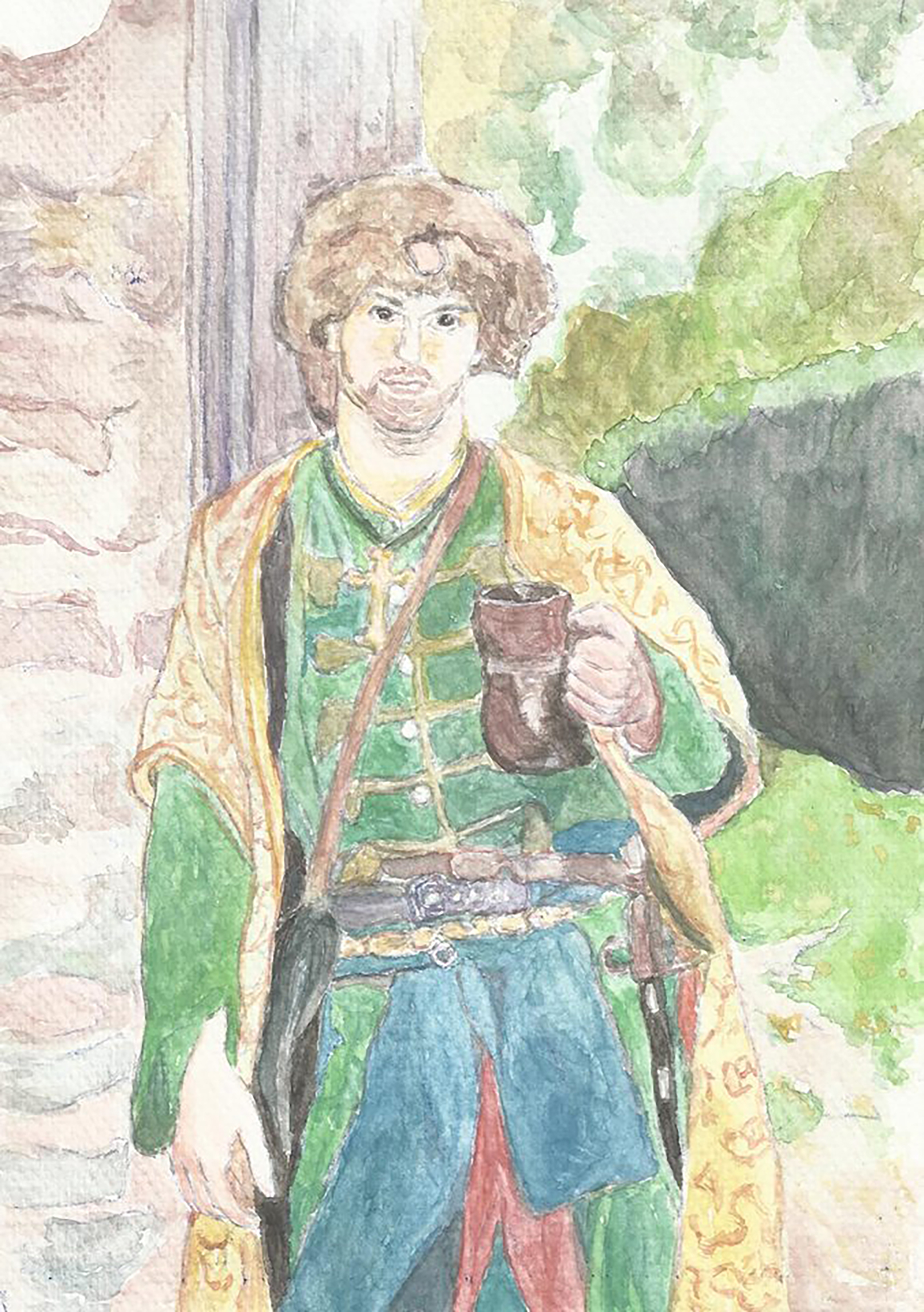
Their speech wandered freely between Polish, Lithuanian, and the old Ruthenian expressions still lingering among families of the borderlands. To any accidental listener it would have sounded like an unintelligible confusion of tongues.
To one another, however, every syllable was perfectly plain.
Yet understanding did not produce agreement.
Leszek maintained an outward composure which only barely concealed his uneasiness.
Karola possessed no such restraint.
Some terrible event, she felt certain, was drawing near.
Worse still, she knew that everyone around her understood more than they were willing to confess.
That realization wounded her deeply.
For years she had believed herself the closest and most trusted servant of the household.
Had she not nursed the children?
Had she not watched faithfully over the manor day and night?
Had she not shared in every joy and every sorrow of her master and mistress?
And now...
Now this stripling presumed to conceal matters from her.
The thought was almost unbearable.
She recalled the extraordinary events of the preceding night.
The master and mistress had remained awake until dawn in the great dining hall.
She herself had been obliged to care for the children.
Then, with the first light of morning, the pair had wandered hand in hand before the manor like lovers scarcely out of courtship.
"Were such marvels to foretell good fortune," she reflected, "their faces would not have worn so mournful an aspect."
No answer satisfied her.
At length she returned slowly to her own little chamber.
Her curiosity remained wholly unsatisfied.
More troubling still, she could not rid herself of the conviction that some overwhelming calamity had already begun to cast its shadow over the house.
For several weeks thereafter nothing remarkable occurred.
Life at the manor resumed its ordinary course.
The servants attended their duties.
The children laughed and played.
The fields demanded the labors of spring.
Only on the second day of May, shortly before the Feast of the Ascension, did Leszek depart before sunrise.
Such absences were by no means unusual.
He often vanished for weeks together upon errands known only to Stanisław.
This time, however, one circumstance struck Karola as singular.
He did not travel alone.
Three wagons accompanied him, together with several servants belonging to the manor.
"Spring work enough for twenty men," she grumbled, "and he must needs carry half the household away with him."
Several days passed.
Then she began to notice that various objects—things always close at hand—had quietly disappeared.
No explanation was offered.
"Whatever else the fellow may be," she thought, "he is no thief."
And Stanisław himself betrayed neither surprise nor concern.
He knew.
Of that she became increasingly certain.
Upon the Feast itself, the thirty-first day of May, an unknown horseman rode into the courtyard.
From the very gate he demanded to see the master of the manor.
He would speak with no other.
No question, however skillfully put, could persuade him to reveal either his name or the purpose of his visit.
That was more than Karola could endure.
After so many years of faithful service—of devotion bordering upon love itself—she now found herself thrust aside like any common serving woman.
Hurt gave way to indignation.
Indignation yielded at last to irresistible curiosity.
And so she committed an act of which she would once have believed herself incapable.
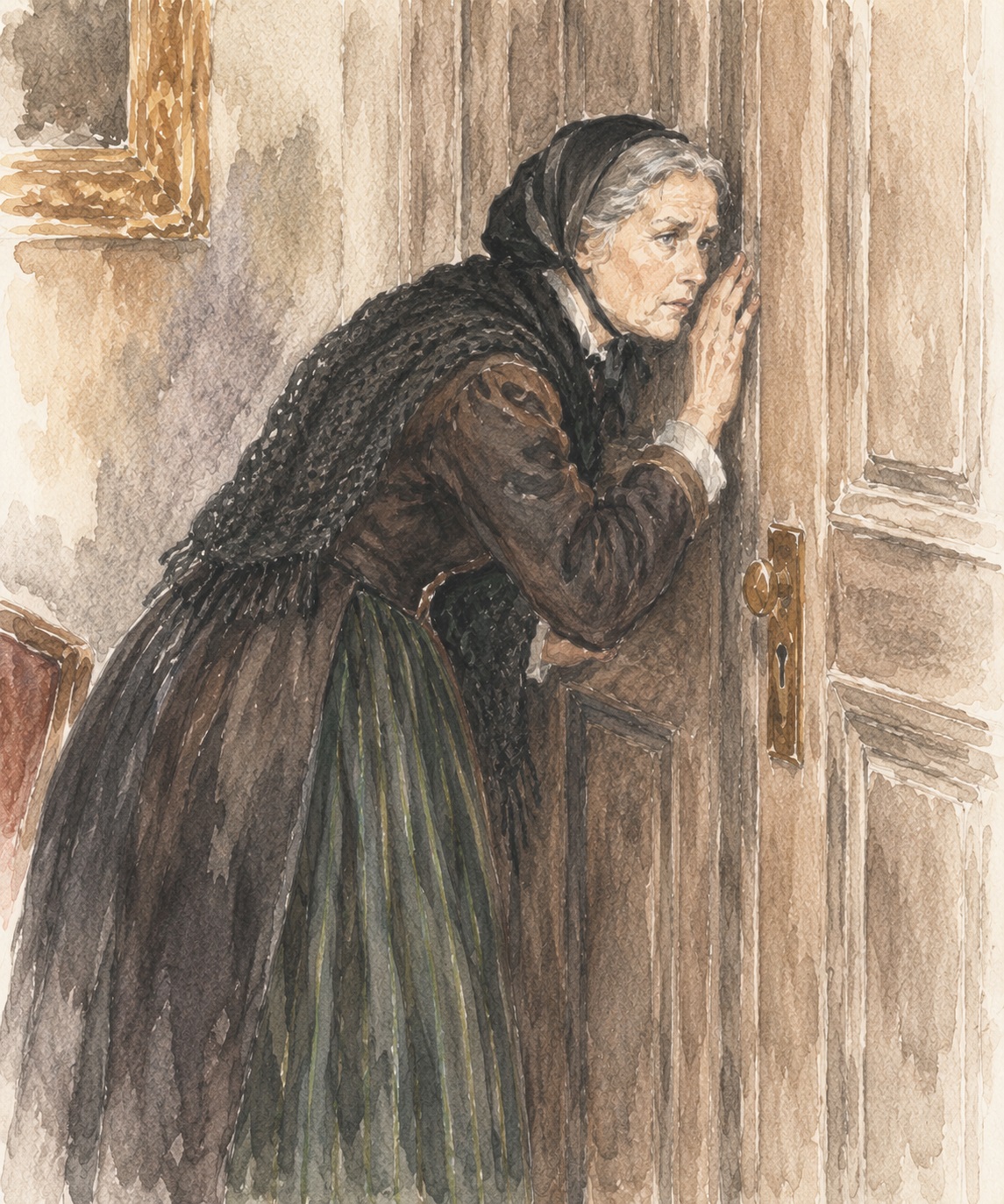
As soon as the stranger and Stanisław had withdrawn into a private chamber, she crept softly to the door... and pressed her ear against the heavy oak.
The voices beyond were low and hurried.
Karola could distinguish not a single word.
The stout oak door admitted scarcely the faintest murmur. Determined to glean something of the conversation, she leaned her weight more firmly against the panels and held even her breath.
Suddenly the latch was lifted.
The door flew inward.
Bereft of all support, the old woman lost her balance and, before she could recover herself, found herself sprawling almost at the feet of the stranger.
"Why, Karola!" exclaimed Stanisław with scarcely concealed amusement. "How fortunate that you have come so promptly. We were on the very point of sending for you."
Then, smiling kindly, he added,
"But pray, rise. There is no necessity for lying upon the floor."
Karola climbed laboriously to her feet.
She shook the dust from her coarse garments, assumed an expression of wounded dignity, and prepared herself for whatever rebuke Divine Providence had ordained.
The two gentlemen regarded her in silence.
One struggled unsuccessfully to suppress his laughter.
The other looked on in complete bewilderment.
At length Stanisław spoke.
"Karola, be so good as to summon everyone belonging to the household. I wish them assembled immediately in the great hall."
"Everyone?" she protested. "They'll carry mud over every floor in the house. And who, pray, is to scrub it away afterward?"
"Karola..."
There was neither anger nor impatience in his voice.
Only quiet insistence.
She understood at once that resistance would profit her nothing.
Still muttering beneath her breath, she departed to carry out the order.
It was the only form of protest still left to her.
The gathering in the great hall proved remarkably brief.
Stanisław informed the assembled servants that they were to harness the wagons without delay and proceed to the estate of one of his brothers, who was preparing a great celebration and stood in immediate need of additional hands.
"That is all," he concluded. "Lose no time."
The servants were already turning toward the door when his voice arrested them once again.
"And remember..."
He paused.
"Serve him as faithfully as you have served me."
Another silence followed.
"I have always been well pleased with your work."
His voice softened almost imperceptibly.
"I thank you for it."
Not a soul moved.
The words struck them with greater force than any command could have done.
Stanisław had always treated those beneath his roof with justice and consideration.
Yet he remained every inch their master.
Never had he spoken to them as though they were companions.
Never had he thanked them merely for fulfilling their duty.
One by one they withdrew into the courtyard, whispering among themselves.
Speculation flourished without restraint.
No one, however, came even close to the truth.
That truth would reveal itself only several days later.
Only Karola remained behind.
"Return to me before dusk," said Stanisław quietly.
"My guest and I must ride out immediately after we have broken our fast. If God grants us favorable roads, we shall be home again by supper."
Karola hesitated.
"May one ask..."
He interrupted her gently, though with unmistakable firmness.
"Ne. Tu negalite žinoti.⁶"
No further question passed her lips.
Within the hour both Stanisław and Marianna departed, leaving the children in Karola's care.
Evening came.
Night followed.
Still they did not return.
It was long after midnight when the rumble of approaching wheels awakened the old nurse from an uneasy sleep.
Joyfully she hurried into the courtyard to welcome her master and mistress home.
She had scarcely opened her mouth when Stanisław's first words rooted her to the ground.
"Karola," he said gravely, "before this night is over we shall leave this place forever."
He looked steadily into her eyes.
"We are going far away."
"And we shall never return."
"You are coming with us."
"Gather your belongings at once."
"Then wake the children and have our packs carried to the wagons."
He paused.
"There is one last matter that still requires my attention."
For several moments Karola remained incapable of speech.
In all the wide world she possessed no family nearer than the Kiliś household. No blood relation had ever shown her such kindness as these people, whom she had served for so many years. They were her home, her children, her entire earthly portion.
And now...
They had chosen to take her with them.
Not the servants already dispatched to Stanisław's brothers.
Not the laborers.
Not the household women.
Only Karola.
The realization filled her with a strange warmth.
At last she believed she understood.
For years she had overheard malicious whispers concerning her master. She herself had dismissed them as idle slander, never imagining that Stanisław and Marianna knew of them as well.
Now all became clear.
They had known.
Known for a very long time.
And this departure...
It had not been conceived yesterday.
It had been prepared patiently, secretly, perhaps for months.
Countless questions still tormented her, yet one certainty remained.
Whatever fate awaited them, the Kiliś family had not abandoned her.
That alone was enough.
Comforted by the thought, she glanced about the courtyard.
To her astonishment neither Stanisław nor Marianna was anywhere to be seen.
"Where can they have gone at such an hour?" she murmured.
Soon she answered her own question.
No doubt they had gone to bid farewell to the old manor—to the walls that had sheltered them, to the orchards, the fields, the graves of those who had gone before.
When at last Stanisław returned, he carried beneath his arm a carefully wrapped bundle.
Karola had seen it once before.
Hidden beneath layer after layer of linen rested an ancient book.
Though she herself could neither read nor write, she had long suspected that whatever secrets governed the fate of the Kiliś family were preserved within those mysterious pages.
Before dawn the wagons were ready.
The children, still half asleep, were lifted gently beneath warm blankets.
The horses stood harnessed in silence, as though they too sensed the gravity of the hour.
No farewells were spoken.
There remained no one to hear them.
As the first rays of morning spread across the fields, the manor stood empty.
Not a living soul remained within its walls.
Only toward midday did several men arrive to tend the abandoned livestock.
They found the buildings strangely silent.
The household of Stanisław Kiliś had vanished.
It was as though the earth itself had opened during the night and swallowed every trace of those who had dwelt there.
Yet the truth was otherwise.
Far to the south, upon roads still unknown to them, a family had begun a journey that would alter not only its own destiny, but that of generations yet unborn.
Footnotes
Taip, kūdikis¹ — Lithuanian: "Yes, my child." An intimate expression reflecting both affection and reassurance.
Aš pasitikiu. Pasitikiu.² — Lithuanian: "I trust you. I truly trust you." The repetition strengthens the emotional weight of the declaration.
Vytautas³ — Grand Duke Vytautas the Great (c. 1350–1430), one of the greatest rulers in the history of the Grand Duchy of Lithuania.
Vardan Dievo Tėvo ir Sūnaus, ir Šventosios Dvasios...⁴ — Lithuanian: "In the name of God the Father, and of the Son, and of the Holy Ghost..." The traditional opening of Christian prayer.
Sėsk!⁵ — Lithuanian: "Sit down!" A brief imperative whose abruptness reflects Karola's authority despite her humble station.
Ne. Tu negalite žinoti.⁶ — Literally: "No. You cannot know." An intentionally guarded reply, suggesting that the knowledge withheld would endanger the listener.
The Polish Commonwealth⁷ — Throughout this edition the historical Rzeczpospolita is rendered as the Polish Commonwealth, preserving the constitutional meaning of the early modern Polish–Lithuanian state rather than reducing it to the modern word Poland.
Royal Prussia⁸ — The autonomous province of the Polish Crown (1466–1772), distinct from the Duchy and later Kingdom of Prussia.
Courland⁹ — A historic Baltic duchy (present-day western Latvia), long associated with the Baltic nobility and the cultural frontier between Lithuania, Livonia, and the Polish–Lithuanian Commonwealth.